



Industry Insights
Which 2ml Vape Format Should Your EU Brand Actually Source?

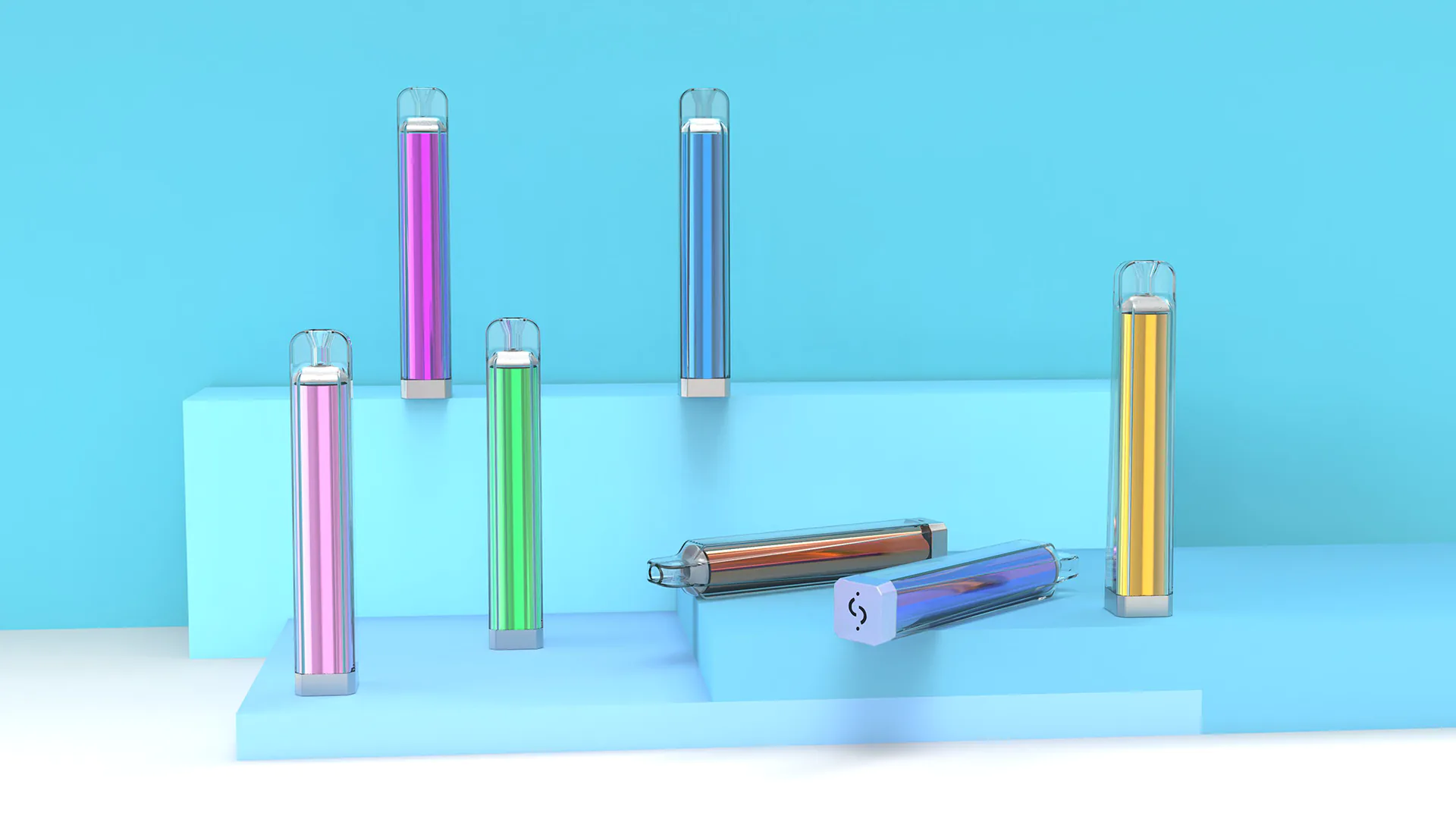
By Leo Chen, Factory Director, GG-VAPE | Dongguan, China
If you’re sourcing vape products for the EU or UK market, the 2ml limit isn’t a constraint — it’s a starting point. Once you accept that 2ml is the ceiling for nicotine-containing e-liquid in a single unit, the real question becomes: which 2ml format is the right fit for your brand, your channel, and your customers?
Because not all 2ml vapes are the same. There are slim disposable pens, rechargeable disposables, refillable pod kits, adjustable-power pod systems, and bare ceramic coil pods for brands doing their own liquid filling. Each one suits a different positioning, a different retail context, and a different type of end customer.
This post walks through each format with real specs, OEM considerations, and honest notes on where each one works — and where it doesn’t.
Why Format Choice Matters More Than You Think
Most EU vape brands focus heavily on flavour development and packaging when they’re building a product range. Both matter. But the hardware format determines your gross margin structure, your repurchase mechanic, your retail shelf footprint, and whether you end up in a price war eighteen months after launch.
A 2ml slim pen and a 2ml refillable pod system might look interchangeable on a spec sheet, but they serve fundamentally different brand strategies. Getting this wrong early is expensive — especially if you’ve already committed to tooling.
Here’s a breakdown of the main formats available, what makes each one tick, and who it’s actually suited for.
Format 1: Slim Disposable Vape Pen (2ml, Non-Refillable)
Products: 2ml Disposable Vape (A36) · 2ml Disposable Vape Pen (A27) · 2ml Slim Disposable Vape (A26)
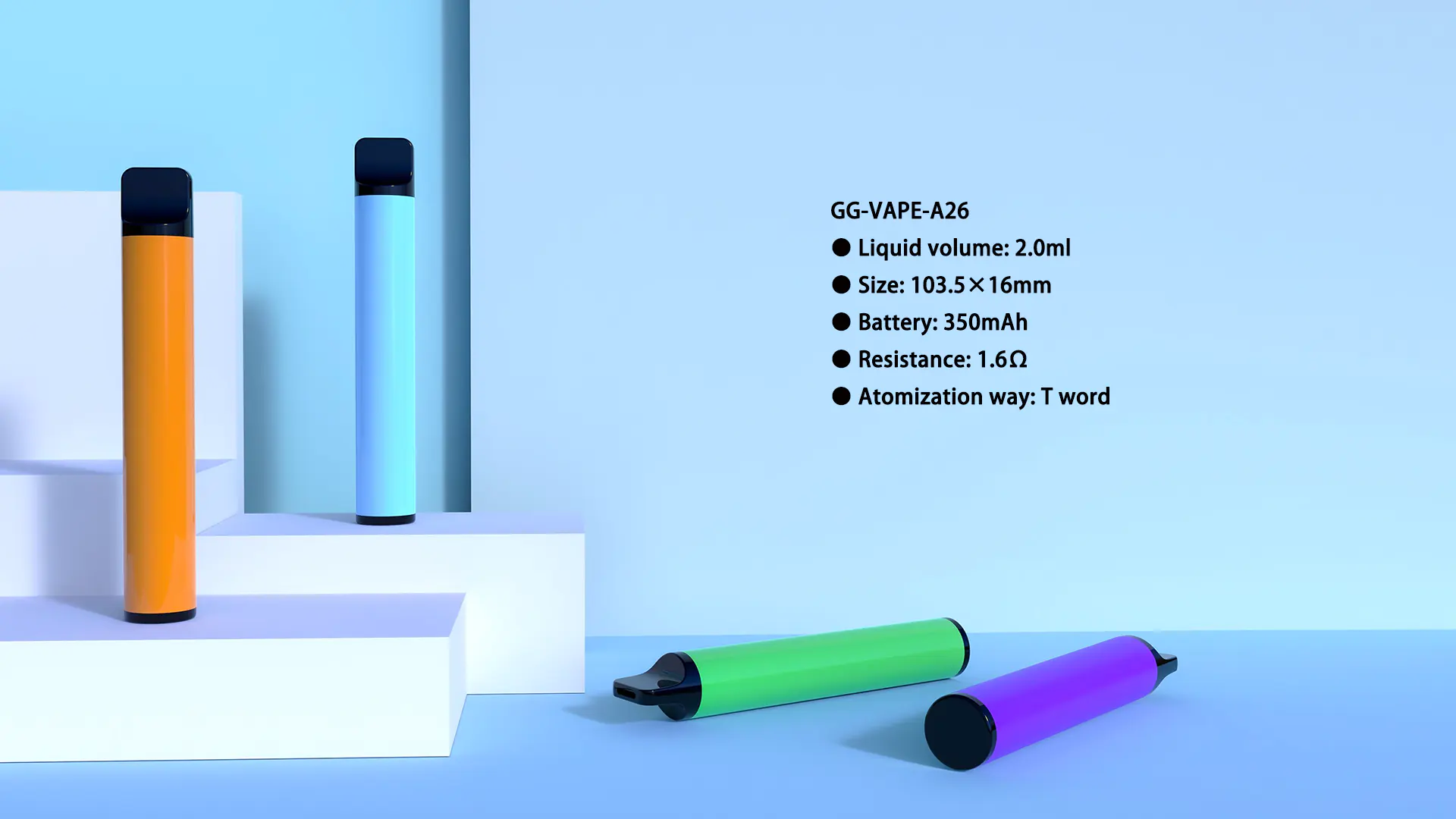
Left to right: A36 square pen, A27 cylindrical pen, A26 ultra-slim 16mm body
This is the most straightforward format in the 2ml category. Pre-filled, sealed, no charging required on some models — the customer opens the pack and vapes until it’s done.
The A36 and A27 both use a 1.6Ω mesh coil and 400mAh battery, sitting in the classic pen-style form factor that’s familiar to ex-smoker audiences. The A26 goes even slimmer at 16mm diameter, with a T-word airflow structure that gives a slightly tighter MTL draw — genuinely useful if your customers are coming from cigarettes and want that resistance.
Where this works well: Convenience retail, petrol stations, tobacco shops, anywhere the purchase decision is fast and the customer doesn’t want to think about settings or refilling. It also works well as a trial SKU — lower price point, zero commitment from the consumer, and if your flavour range is good, it creates demand for a longer-term product.
OEM considerations: MOQ for a single colour is typically around 2,000 units. Pre-filling is the manufacturing complexity here — your liquid formula needs to be confirmed and approved before production, and any batch-to-batch flavour inconsistency shows up immediately in a sealed product. Make sure your OEM partner manages filling directly, under controlled quality processes, rather than outsourcing the liquid step.
What to watch: Margin is thinner on disposables as a category. If you’re building a brand for the long term, this format works better as a gateway product than a standalone range.
Format 2: 2ml Rechargeable Disposable (Ceramic or Mesh Coil)
Product: 2ml Rechargeable Disposable (A03)
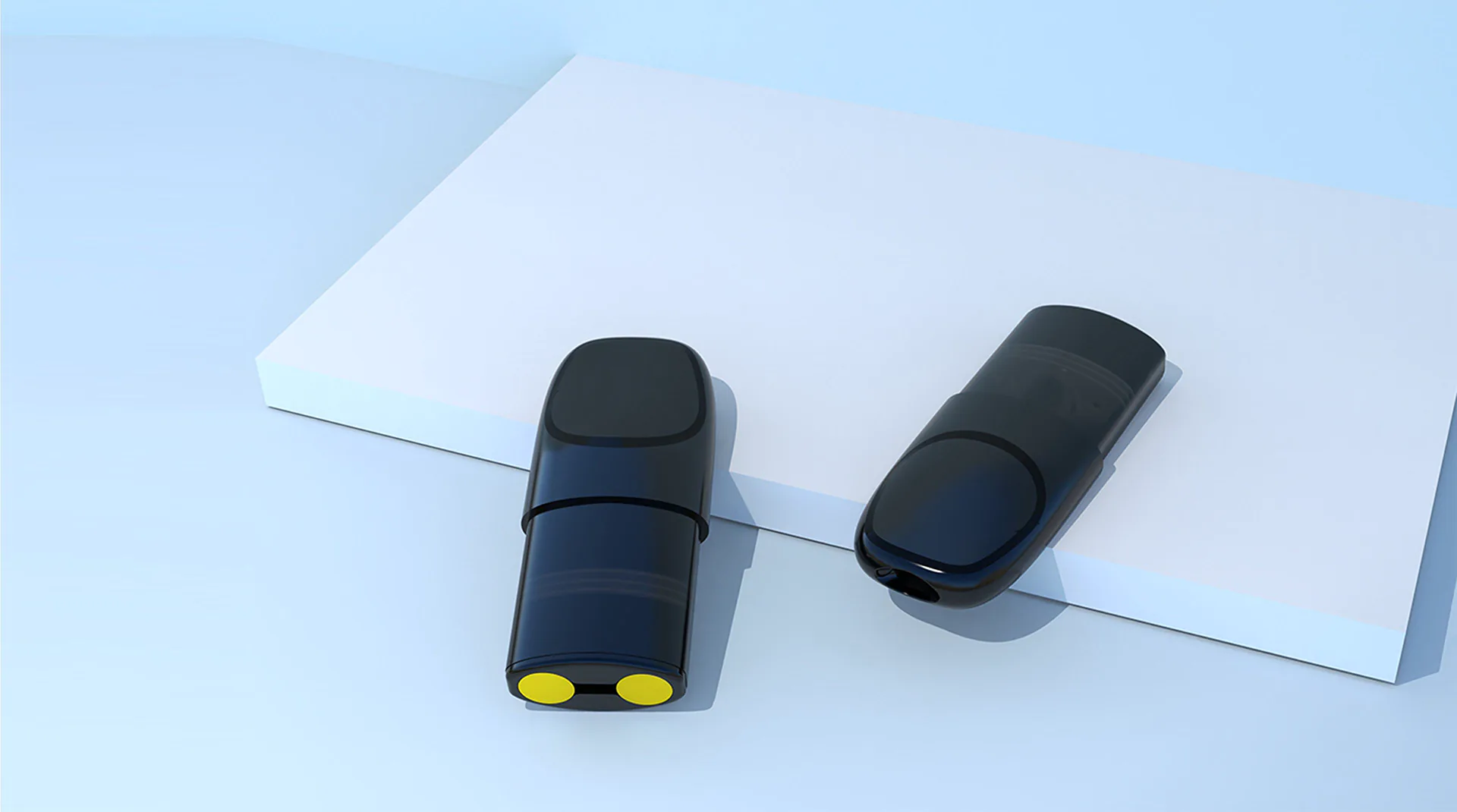
A03 ultra-slim body — 114.2 × 19.7 × 10.7mm, Type-C charging, ceramic or mesh coil options
The A03 is essentially a sealed disposable that you can top up on charge — 380mAh battery, Type-C, ultra-slim ergonomic design. What makes it stand out is the coil choice: you can spec ceramic or mesh, which is unusual in this size category.
Ceramic coil gives a cleaner, cooler vapour with very pure flavour delivery. It’s slightly slower to ramp up but more consistent across the life of the liquid. For premium positioning or brands working with complex, layered flavour profiles, ceramic is worth the slightly higher unit cost.
Mesh coil is faster, warmer, more immediate. Better for fruit and menthol profiles where impact matters more than nuance.
Where this works well: Slightly more engaged consumers who appreciate being able to charge rather than having to buy a new device. Convenience stores still work, but this also sits comfortably in vape specialist retail and online. It’s a good middle ground between a pure disposable and a full refillable system.
OEM considerations: The coil-type decision should be made at the brief stage — it affects liquid viscosity compatibility (ceramic performs better with slightly thinner VG/PG ratios), and changing it mid-production adds lead time. If you want to launch both variants eventually, source samples of both before committing.
Format 3: 2ml Refillable E-Cigarette
Product: 2ml Refillable E-cig (G2001)
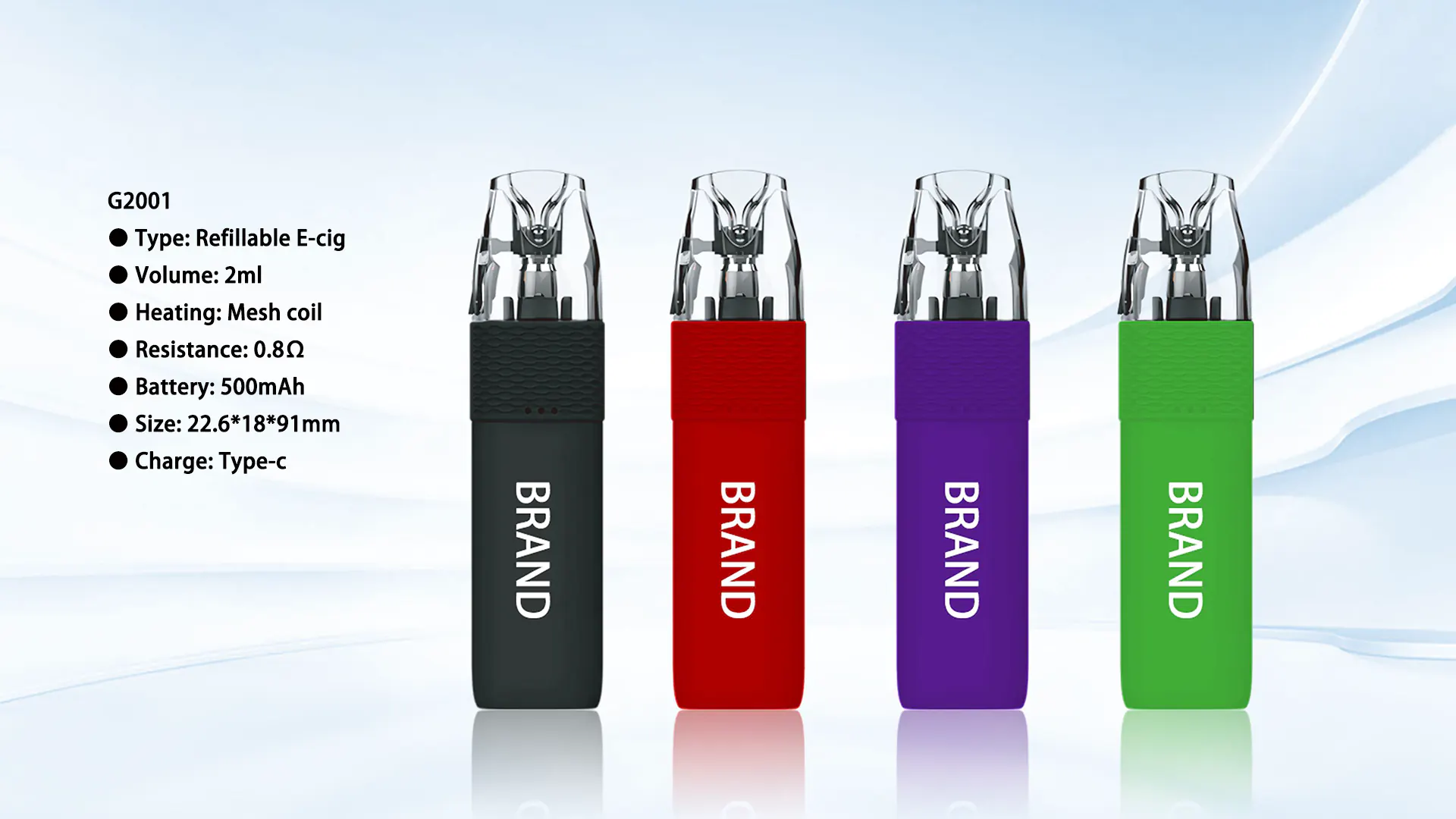
G2001 — 500mAh, 0.8Ω mesh coil, Type-C, 22.6 × 18 × 91mm
The G2001 is a refillable device — the user fills it themselves with their own liquid, using the same unit over time and replacing it when the coil degrades. At 500mAh with a 0.8Ω mesh coil, it’s a capable everyday MTL device in a compact form factor.
For brand owners, the refillable model changes the commercial relationship with the customer. You’re not selling them a sealed experience — you’re selling them a device that becomes the vehicle for whatever liquid they choose to use. That can work in your favour (brand loyalty around a liquid range) or against you (they fill it with a competitor’s liquid).
Where this works well: Brands that sell both hardware and a matching liquid range get the most from this format. Position the device as the entry point and build margin on repeat liquid purchases. It also suits markets where single-use packaging is increasingly scrutinised — the refillable story is an easier sell in sustainability-conscious retail environments.
OEM considerations: Refillable devices have more customer touchpoints than sealed ones — fill port, airflow, coil life. Quality control in production matters more here, and the coil replacement experience (or lack thereof, since this is a fixed-coil device) needs to be clearly communicated in your packaging copy.
Format 4: 2ml Refillable Pod System with Adjustable Power
Product: 2ml Refillable Pod System (A16)
A16 — 850mAh, 5–25W adjustable output, 0.4Ω / 0.6Ω / 0.8Ω mesh coil options, Type-C
The A16 is the most technically capable device in the 2ml range. It’s a refillable pod system with adjustable power output (5–25W), three coil resistance options spanning MTL through to restricted direct lung (RDL), and an 850mAh battery that handles most users’ full-day usage comfortably.
This is the format for brands targeting more engaged vapers — people who’ve been vaping for a while, have preferences around power and airflow, and want a device that can be tuned to how they vape, not just how the manufacturer decided it should work.
Where this works well: Vape specialist retail, online DTC brands with an educated customer base, and anywhere your margin model is built on repeat coil or liquid sales rather than one-off hardware transactions. At this level of product, customers form genuine brand preferences — loyalty is achievable in a way that it isn’t with sealed disposables.
OEM considerations: The coil ecosystem is important to plan from day one. If you want customers to buy replacement coils (or pods) from you rather than third-party compatible coils, you need to own that conversation from the product launch. TThis usually means committing to buyer-owned tooling rather than standard catalog OEM — you control the coil spec under a dedicated mold, so only your coils fit.
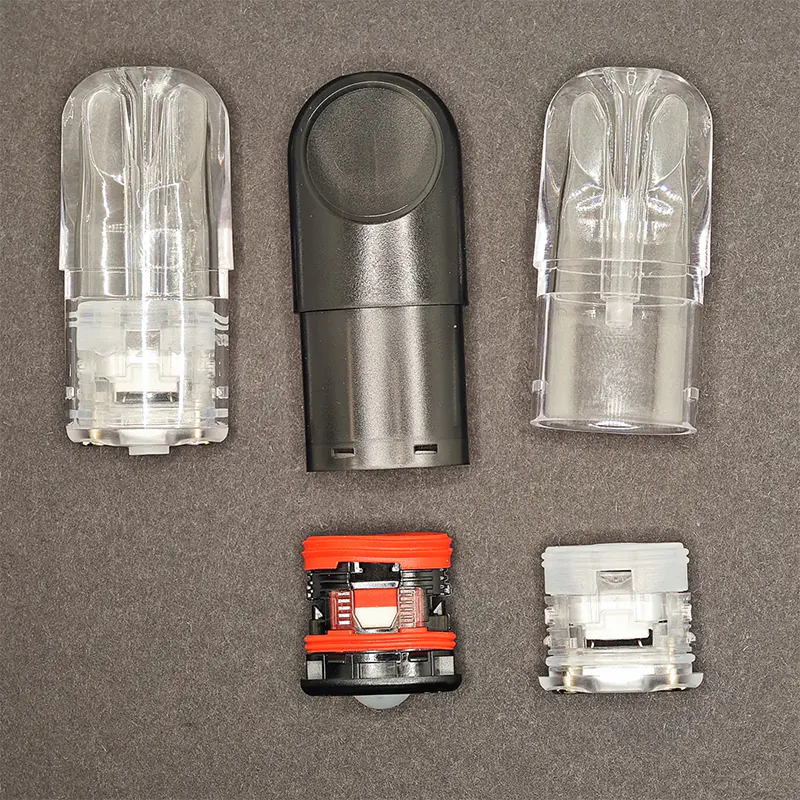
Format 5: Empty Ceramic Coil Pod (Wholesale / Own Filling)
Product: Empty Pod Cartridge (Ceramic Coil) 2ml
Empty pod — 1.1Ω ceramic coil, 2.0ml capacity, Gen 5 / Gen 6 compatible styles, B2B wholesale
This one is different from the others — it’s not a finished device but an unfilled pod cartridge. 1.1Ω ceramic coil, 2.0ml capacity, available in Gen 5 and Gen 6 compatible styles. It’s for brand owners who are filling liquid themselves or working with a UK/EU-based liquid manufacturer and want to control the fill process locally.
Where this works well: Brands that already have liquid production capability or a strong relationship with a UK/EU filler. Also useful for brands that want to keep their liquid formula proprietary and aren’t comfortable having a Chinese factory handling it. The ceramic coil choice gives a premium flavour story — “ceramic coil technology” lands well on packaging for a certain type of consumer.
OEM considerations: Compatibility check is essential before ordering. The pod needs to be confirmed compatible with the battery/mod your customers are using, especially if you’re selling the pod as a replacement cartridge for an existing device range. We support compatibility checks as part of B2B wholesale enquiries — don’t skip this step.
Ceramic vs Mesh Coil: Which Should You Spec?
Since coil type comes up across several of these formats, it’s worth addressing directly. Here’s the honest comparison:
| Ceramic Coil | Mesh Coil | |
|---|---|---|
| Flavour character | Clean, cool, layered | Warm, immediate, intense |
| Ramp-up speed | Slower | Faster |
| Best for | Complex flavour profiles, premium positioning | Fruit, menthol, bold profiles |
| Consistency over time | More consistent | Slightly variable near end of coil life |
| Unit cost | Slightly higher | Lower |
| Typical resistance (2ml) | 1.0–1.2Ω | 0.8–1.6Ω |
For most EU/UK brands launching a mainstream consumer range, mesh coil is the default — it’s what customers expect, it’s reliable, and it costs less. Ceramic makes sense if you’re positioning at the premium end or if your flavour development involves more subtle, complex profiles where the cleaner delivery actually shows up in the experience.
Rechargeable vs Non-Rechargeable in the EU Market
A quick note on this, because the regulatory and commercial picture has shifted in the last couple of years.
Non-rechargeable 2ml disposables are still legal under TPD in most EU markets, but they’re coming under increasing pressure — EPR (Extended Producer Responsibility) packaging legislation in several member states has added cost to non-rechargeable single-use formats, and some retailers have moved away from them proactively.
Rechargeable options (A03, G2001, A16) have a cleaner sustainability story and avoid some of the EPR cost exposure. For brands building for the medium term — not just this season — rechargeable formats are the more defensible choice.
That said, non-rechargeable pens (A36, A27, A26) still have real commercial utility as trial SKUs, point-of-sale impulse products, and formats for markets where charging infrastructure is less reliable. Don’t write them off — just factor the full landed cost including any EPR levies into your margin calculation.
Which Format for Which Brand Strategy?
Here’s a simple map to orient the decision:
Launching a new brand and need fast market entry: Start with a 2ml slim disposable (A36 or A27) in 3–5 flavours. Prove the demand, collect feedback, then invest in a refillable platform.
Building a premium brand for specialist retail: The A16 refillable pod system gives you a product story worth telling. Pair it with a signature liquid range and own the coil ecosystem.
Targeting sustainability-conscious consumers or retail buyers: The G2001 refillable e-cig or A03 rechargeable disposable both have a credible story to tell on environmental grounds.
Running a liquid brand that wants a hardware delivery vehicle: The empty ceramic pod for own-fill, or the A03 with ceramic coil spec, let your liquid do the talking.
Expanding an existing range with a trial/travel SKU: The A26 ultra-slim at 16mm is genuinely pocketable and different enough from standard disposable pens to sit alongside without cannibalising.
OEM Practicalities: What You Actually Need to Know
A few things that come up in almost every 2ml OEM enquiry:
Minimum order quantities typically run around 2,000 units per color. Tooling and setup costs vary by customization depth and market — request current terms for your project.
Lead time from confirmed spec to ready-to-ship is 10–12 days for cartridges/pens, assuming tooling is already done and your liquid formula is confirmed. If you’re developing custom liquid alongside the device, run both tracks in parallel — don’t wait for hardware approval before starting liquid development.
TPD notification for devices sold in the EU is separate from liquid notification. Devices (hardware) are notified under Article 20 of TPD; liquid is notified under Article 20 too but with ingredient-level disclosure. If you’re selling both, coordinate the submissions — it saves time and avoids conflicting documentation.
Packaging compliance — health warning, font size, warning placement — is your responsibility as the brand owner, but we can provide compliant label templates for EU/UK markets. Don’t finalise artwork before checking the current requirements in your target markets.
Talk to Us About Your 2ml Range
All seven 2ml products listed above are available for OEM customisation — brand, colour, packaging, coil spec, and liquid fill if you need a one-stop solution. We also support compatibility checks for the empty pod if you’re evaluating it for an existing device platform.
If you’re still deciding which format fits your brand, send us the brief — where you’re selling, what your price point is, what channel the product is going into — and we’ll tell you honestly what we think is the right call.
Leo Chen, Factory Director 📧 [email protected] 📱 WhatsApp: +86-134-1240-5657 🌐 gg-vape.com
Related reading:
- Empty Vape Pods Wholesale OEM Sourcing Guide
- Custom Pod System OEM vs Fast Shipping
- EU/UK Vape Compliance 2026: TPD & EPR Guide
- Nicotine Salts vs Freebase Nicotine
- Private Label E-Liquid OEM for EU/UK Brands