



Industry Insights
The 2026 European Vape Brand Survival Guide: TPD, EPR, and What Your OEM Factory Isn’t Telling You

By Leo Chen, Factory Director, GG-VAPE
10 years supplying OEM hardware to European vape brands. 27 EU/UK TPD registrations completed. I’ve watched brands lose six-figure orders at Frankfurt and Heathrow customs because they chose the wrong factory. This is what I’ve learned.
$50,000 in custom inventory. Thirty days of production. A container on the water.
Then a message from your freight forwarder: entire pallet held at Frankfurt. Reason: documentation non-compliance.
This is not a worst-case scenario. It happened to three of my clients’ competitors last quarter alone — and in every case, the root cause was the same. The factory knew how to build a vape. It had no idea how to build one that could legally enter Europe.
Selling in the EU and UK in 2026 is not primarily a product challenge. It’s a compliance challenge. TPD notification requirements, EPR environmental obligations, WEEE battery directives, UK TRPR post-Brexit divergence — each layer tightens the window for brands that don’t have a manufacturing partner who treats documentation as seriously as production.
Here’s what you actually need to know.
1. TPD in 2026: The “2ml and 20mg” Myth Is Getting Brands Killed
If your supplier’s answer to “are you TPD compliant?” is “yes, we keep pods under 2ml and nicotine under 20mg/ml” — start looking for a new supplier.
Those limits are the entry-level requirement. The actual compliance burden lives in seven areas that most factories in the mid-to-low price tier either don’t understand or actively avoid disclosing:
Emissions testing and toxicology reporting. Before any nicotine-containing product reaches an EU market, you need to submit an ECID (EU-CEG) notification — six months in advance of sale. That notification requires factory-generated emissions testing reports showing vapor output by component. Cheap unverified coils routinely fail heavy metal emissions thresholds. If your factory can’t produce this documentation within 48 hours of a request, they don’t have it.
BOM stability and the mid-production swap problem. Once a device is registered under EU-CEG, the bill of materials is locked. Changing the battery brand, coil specification, or even a specific polymer in the casing technically invalidates the registration. I’ve seen factories swap battery suppliers mid-production run to save $0.05 per unit. The brand owner didn’t find out until their compliance agency flagged it during a routine audit — by which point several months of sales were at risk. Require contractual BOM lock-in before production starts. Any factory that resists this clause is telling you something.
Leak-free certification under transport simulation. TPD mandates that devices produce zero leakage during transport and normal use. This requires high-pressure aviation simulation testing on production batches, not just sample units. Ask for the test report, not a verbal assurance.
UK TRPR vs. EU TPD divergence — 2026 update. Post-Brexit, the UK’s Tobacco and Related Products Regulations have developed meaningfully differently from EU TPD. As of January 2026: UK MHRA requires more detailed nicotine salt compound declarations than the EU; EU submissions require expanded emissions data sets; both require six-month advance notification, but UK TRPR additionally mandates localized packaging warnings in English that meet specific MHRA formatting requirements. If you’re selling across both markets, your manufacturer needs to be running parallel documentation tracks, not treating them as the same submission.
The nine documents your factory should deliver with every production run. At minimum: emissions testing report, full BOM, e-liquid MSDS, hardware MSDS (battery), RoHS certificate, CE certificate, leak-free test report, ISO facility certification, and brand-specific labeling compliance declaration. If your current supplier has never sent you an unprompted documentation package, ask yourself why.
2. EPR and WEEE: The Environmental Compliance Bill That’s Now Real
The biggest structural change in the 2026 European vape market isn’t a new product category or a distribution shift. It’s the full enforcement of Extended Producer Responsibility legislation.
From 1 January 2026, EPR is mandatory across the EU. In simple terms: if you sell a vape device into a European market, you are legally responsible for funding its end-of-life recycling. “Responsible” means registered with the relevant national EPR scheme, contributing fees, and being able to demonstrate compliance to retailers on request.
The commercial consequences are immediate. Major European retail chains now require EPR registration proof at the point of supplier onboarding. No registration, no shelf space — regardless of how good your product is.
The current fee structures vary by market, but as reference points: Germany charges approximately €0.12 per unit for non-recovered products under current EPR enforcement; France has moved to a model where unregistered products face per-unit penalties reaching €0.18 under new scheme rules. At volume, this isn’t a rounding error.
What compliance-focused OEM manufacturing addresses directly:
Material selection. Devices built for European markets should use food-grade, recyclable PCTG for pod and cartridge housing. Non-compliant plastics create both EPR documentation problems and potential customs issues at material-level inspections.
Battery extraction architecture. EU legislation is trending toward mandatory user-removable batteries in consumer electronics, including vape devices. Devices engineered with modular battery access satisfy both current WEEE requirements and likely future-proof against the next regulatory iteration. This is an engineering decision that needs to be made at the design stage — not retrofitted.
Full RoHS documentation. Circuit boards and solder compounds must be demonstrably free of restricted hazardous substances. This isn’t just a certification to display; it’s a document that your buyers will ask for.
3. Factory vs. Trading Company vs. Compliance Agency: The Real Cost Comparison
Most brand owners entering Europe try one of three procurement models. Here’s what each actually costs and delivers:
| Direct OEM Factory | Trading Company | External Compliance Agency | |
|---|---|---|---|
| Documentation authenticity | High — factory generates, factory owns | Low — frequently incomplete or falsified | Depends entirely on factory cooperation |
| BOM change risk | Low — contractual lock-in available | High — no visibility into production | No control |
| Customs clearance rate | 95%+ with full documentation package | ~60% | Depends on factory |
| Cost per 1,000 units | Baseline | 15–25% cheaper upfront | Baseline + $8,000–15,000 agency fees |
| Lead time (custom) | 18–30 days | Variable | Longer |
| Lead time (restock) | 5–7 days from compliant stock | Variable | N/A |
The pattern I see consistently: brands choose the trading company route to save 20% on unit cost, then spend the equivalent of three months’ margin on clearing a customs hold, updating documentation, or replacing a failed batch. The savings don’t survive contact with European customs.
External compliance agencies are not useless — but they’re only as good as the factory documentation they receive. If the factory doesn’t produce accurate technical data, the compliance agency has nothing to work with. The compliance problem is solved at the manufacturing stage, not after.
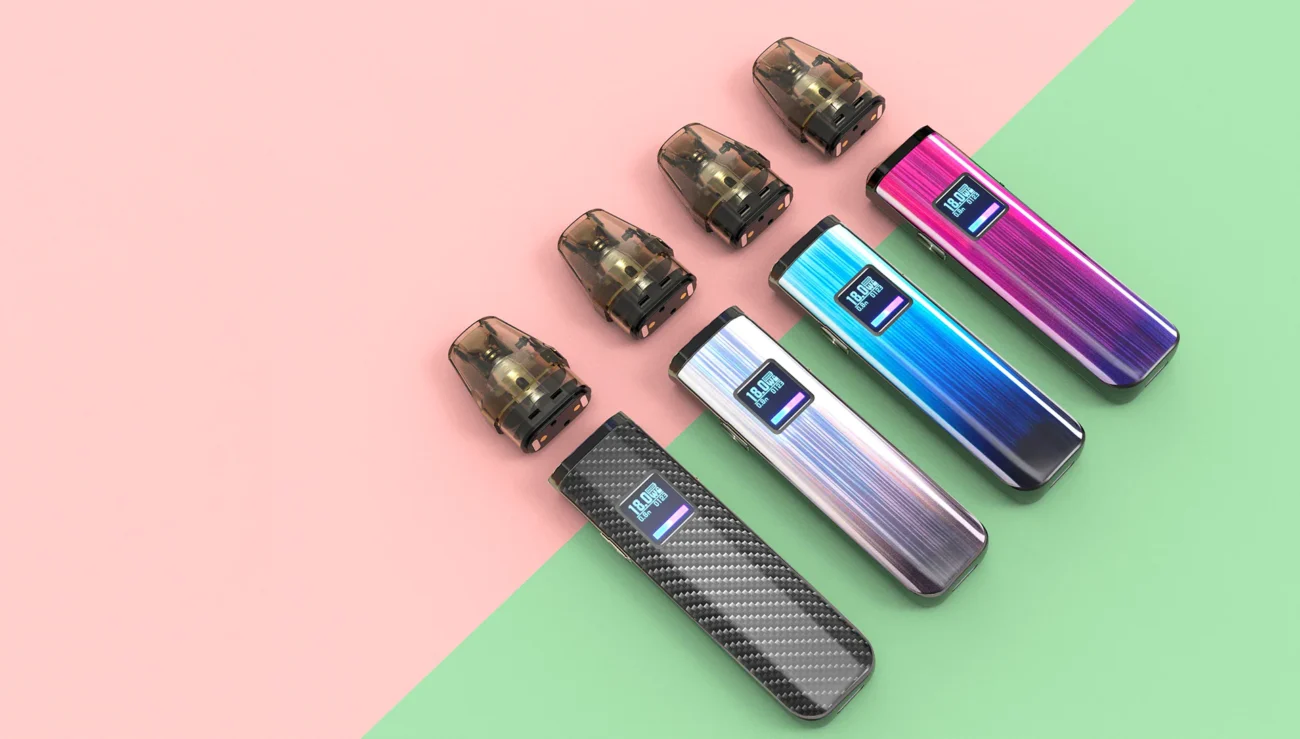
4. What Compliance-Integrated Manufacturing Actually Looks Like
The difference between a factory that tells you it’s compliant and one that operates compliantly isn’t the certifications on the wall. It’s the process.
At GG-VAPE, the compliance documentation package isn’t assembled at the end of production when your shipping inquiry arrives. It’s built in parallel from day one:
During the 18–30 day custom OEM cycle: design sign-off triggers the documentation brief. BOM is locked contractually before production commences. Emissions testing runs concurrently with production, not after. Leak-free simulation testing is completed on production batches, with reports timestamped.
For 5–7 day standard stock restocks: documentation packages are pre-compiled for all standard compliant SKUs. You’re not waiting for paperwork on a restock.
BOM change protocol: if any material change is required — supplier substitution, component update — we flag it to the client within 24 hours and submit an amended ECID notification within 48 hours where required. The client shouldn’t be finding out about material changes from a compliance audit six months later.
The nine-document package ships with every order as standard. This isn’t a premium service tier. It’s what responsible manufacturing for regulated markets requires.
5. The 2026 EU & UK Vape Compliance Checklist
The checklist below covers the 28 critical compliance checkpoints across TPD/TRPR notification, EPR registration, WEEE requirements, and OEM documentation. Use it to audit any factory you’re currently working with or evaluating.
Each item is marked with one of three indicators:
✅ Factory must provide — non-negotiable; absence is a red flag
🚩 Red flag — if you see this, reconsider the relationship
📋 Brand responsibility — your team owns this, not the factory
TPD/TRPR Notification
- ☐ Emissions testing report per SKU ✅ Factory must provide
- ☐ Full BOM with supplier names for key components ✅ Factory must provide
- ☐ BOM lock-in clause in production contract 📋 Brand responsibility
- ☐ ECID submission timeline confirmed (6 months pre-sale) 📋 Brand responsibility
- ☐ UK TRPR filed separately from EU-CEG 📋 Brand responsibility
- ☐ Factory has previously completed EU-CEG submission for other clients ✅ Factory must provide — ask for evidence
- ☐ Factory notifies client of any component substitution 🚩 Red flag if they can’t confirm this process
Product Safety Documentation
- ☐ E-liquid MSDS ✅ Factory must provide
- ☐ Battery MSDS from named battery manufacturer ✅ Factory must provide
- ☐ CE certificate referencing specific SKU ✅ Factory must provide
- ☐ RoHS certificate with test report ✅ Factory must provide
- ☐ Leak-free test report from production batch ✅ Factory must provide
- ☐ ISO 9001 facility certification ✅ Factory must provide
- ☐ Coil heavy metal emissions within EU limits ✅ Factory must provide
- ☐ Nicotine delivery data per puff ✅ Factory must provide
EPR & WEEE
- ☐ Device materials list with recyclability classification ✅ Factory must provide
- ☐ PCTG or equivalent compliant material confirmed ✅ Factory must provide
- ☐ Battery extraction mechanism meets WEEE standards 🚩 Red flag if factory is unaware of this requirement
- ☐ EPR registration in target market(s) 📋 Brand responsibility
- ☐ EPR fee contribution documentation available 📋 Brand responsibility
- ☐ Recycling partner identified in target market 📋 Brand responsibility
Packaging Compliance
- ☐ Health warning text in local language 📋 Brand responsibility
- ☐ Nicotine content declaration format meets TPD/TRPR spec 📋 Brand responsibility with factory input
- ☐ Child-resistant packaging confirmed ✅ Factory must provide evidence
- ☐ Tamper-evident seal confirmed ✅ Factory must provide
Commercial & Contractual
- ☐ BOM change notification clause in contract 📋 Brand responsibility
- ☐ Documentation delivery timeline in contract 📋 Brand responsibility
- ☐ Defect remediation process documented 🚩 Red flag if factory can’t describe this
- ☐ Factory address verified against ISO/audit documentation 📋 Brand responsibility
Working With GG-VAPE on European Market Entry
If you want to review your current manufacturing partner against this checklist, or if you’re at the stage of selecting a factory for your first EU/UK run, the conversation starts with documentation — not samples.
We can audit your existing supplier’s documentation package against current TPD and EPR requirements, identify the gaps before they become customs problems, and where we’re the right fit, support your brand’s European launch with the full compliance infrastructure built in.
Contact the GG-VAPE Engineering Team →
View OEM/ODM Services →
🔗 Related Reading
- How to Choose a Vape OEM Manufacturer: The Complete Guide
- How to Launch Your Own Vape Brand in Europe in 2026
- Empty Vape Pods Wholesale: OEM Sourcing Guide
- 2026 European Vape Market Outlook
For B2B trade enquiries only. Products contain nicotine. Adults 18+ only.