



Industry Insights
Why European Vape Retailers Are Dropping Disposables for Pod Systems — And What OEM Brands Need to Build Right Now

Walk into any serious vape retailer in Germany, the Netherlands, or the UK right now and look at what’s behind the counter versus what’s getting restocked most often. The disposable shelf is still there. But the conversation with the buyer has shifted.
Twelve months ago, a European retail buyer’s main question about a new product was “what flavors does it come in.” Today the first question is almost always “is it rechargeable, and can the battery be removed for recycling.” That shift didn’t happen because consumers suddenly became environmentally conscious. It happened because retailers started getting pressure from their landlords, their local councils, and their insurance providers about single-use battery waste sitting in general waste streams.
Pod systems — specifically replaceable pod systems and high-capacity refillables — are the direct commercial beneficiary of that shift. This article explains what’s actually driving European B2B demand for pod hardware in 2026, what specification decisions matter most for the premium shelf position, and what that means if you’re briefing an OEM manufacturer right now.
The Real Reason Pod Systems Are Taking Premium Shelf Space
The regulatory environment is the proximate cause, but it’s not the whole story.
European vape retailers operate on thin margins in a market with a lot of SKU competition. A product that generates returns — because the battery died before the e-liquid ran out, or because a customer complained about inconsistent flavor after the third refill — costs the retailer money in ways that aren’t fully captured in the wholesale margin. Premium shelf space in European specialist retail goes to products with low return rates, consistent performance, and customers who come back specifically asking for that product by name.
Pod systems with well-engineered coils and adequate battery capacity deliver this more reliably than entry-level disposables. The consumer proposition is straightforward: better flavor consistency from first to last puff, lower cost per session than single-use, and the ability to swap flavors without changing the device. For a retailer, that translates to higher basket size, stronger repeat purchase, and a customer who associates the experience with the brand rather than with a generic disposable format.
The premium segment in Germany and Scandinavia in particular has moved substantially toward refillable and replaceable pod formats over the past 18 months. UK convenience remains more disposable-dominant, but the WEEE enforcement trajectory is pushing that market in the same direction.
Custom pod system capabilities:
What “Premium” Actually Means at the Hardware Level
The word gets used loosely. From a B2B buyer perspective, a pod system earns the premium designation — and the premium wholesale price — through specific technical characteristics.
Coil longevity and flavor stability. A mesh coil that delivers consistent flavor from fill one through fill ten is the single most important factor in consumer retention for a refillable pod system. This sounds obvious but is genuinely difficult to achieve at manufacturing scale. It requires coil material quality control that not all factories maintain. The tell is the return rate data — ask your supplier what their consumer return rate is on refillable pod coils and whether they track it by batch.
Battery capacity matched to pod volume. A 2ml pod paired with a 350mAh battery will frustrate users who finish the pod before the battery depletes or vice versa. The engineering brief should match these parameters deliberately. For the EU/UK market where 2ml is the TPD ceiling for pre-filled products, a 500–650mAh battery is the appropriate range for a device that users will refill multiple times before recharging.
Airflow precision. MTL (mouth-to-lung) and RDL (restricted direct lung) are distinct draw experiences with distinct consumer segments. A pod system that tries to serve both through a loose airflow adjustment often satisfies neither. Define your target consumer’s draw preference in the product brief and build the airflow architecture around that specific experience.
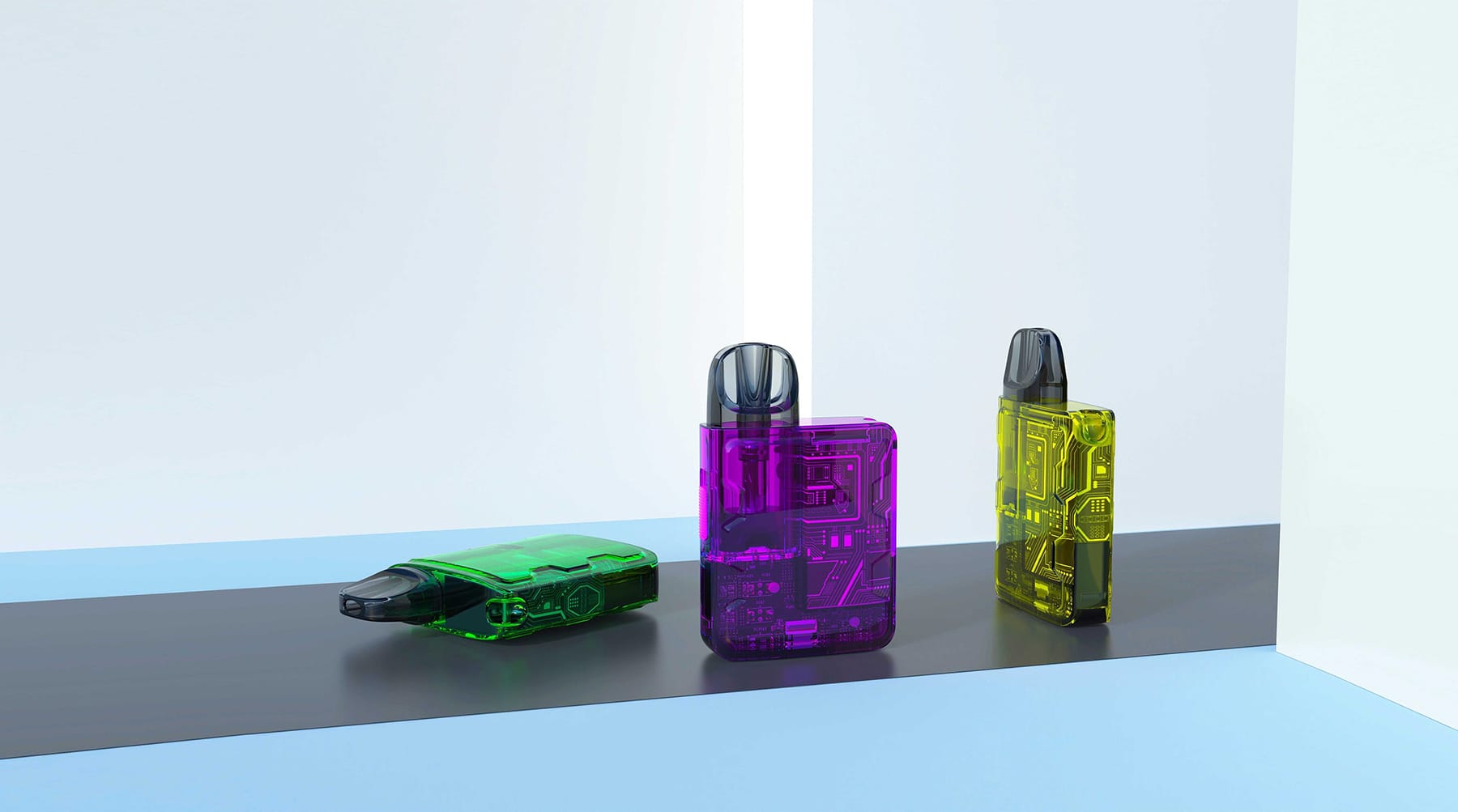
Form factor and material quality. In the premium segment, PCTG transparent casing — which allows the consumer to see remaining e-liquid — has become a meaningful differentiator. It addresses the single most common user complaint about pod systems: not knowing when to refill. Transparent or windowed designs reduce the “dry hit” experience that drives negative reviews and returns.
The OEM Brief for a European Premium Pod System: What to Specify
If you’re commissioning a pod system for EU/UK premium retail in 2026, the brief needs to address these parameters explicitly. Leaving any of them unspecified means the factory will make a default choice that may not match your market position.
Coil type: Ceramic for EU/UK market. Cleaner emissions profile, more defensible heavy metal documentation for EU-CEG notification, better flavor consistency at the nicotine salt concentrations that dominate this market.
Resistance: 0.8Ω–1.2Ω for MTL-focused pod systems targeting smokers transitioning to vaping. 0.5Ω–0.7Ω if you’re building for experienced vapers who want a warmer, more voluminous draw.
Battery: 550mAh minimum for a device consumers will carry all day. 800mAh+ if the form factor allows it without compromising portability.
E-liquid capacity: 2ml for pre-filled EU products (TPD ceiling). 3ml–6ml for refillable configurations where the restriction applies to pre-filled products, not hardware capacity.
Charging: Type-C is now the baseline expectation. Any device shipping with micro-USB in 2026 will face buyer resistance at the retail onboarding stage.
Battery extraction: Design the battery to be user-removable. This satisfies current WEEE requirements and protects against future mandatory regulations. It also becomes a positive retail selling point in markets where sustainability claims drive purchase decisions.
Three Formats With Strong EU/UK B2B Demand Right Now
Replaceable pod systems (8ml–12ml pods): The format growing fastest in German and Dutch specialist retail. The consumer keeps the battery device and buys replacement pods — driving repeat purchase revenue for both the retailer and the brand. Engineering priority is pod seal integrity across multiple insertion cycles and consistent coil performance across pod batches.
Refillable open systems (2ml–6ml, adjustable output): Strong in the UK experienced vaper segment and in markets with a well-developed e-liquid retail ecosystem. The device becomes a platform for e-liquid brand upsell. Engineering priority is airflow adjustability and coil compatibility range.
High-capacity transparent pod systems (10ml–15ml, sealed): Growing in markets where convenience and session length matter more than refillability. Crystal or transparent casing with visible e-liquid level indicator is becoming a category differentiator. Engineering priority is leak-free construction and coil longevity at higher e-liquid volumes.
What GG-VAPE Builds for the European Premium Segment
The GG-VAPE catalog includes replaceable pod systems from 5ml to 12ml pod capacity, refillable open systems with adjustable output from 5W to 30W, and transparent-casing configurations specifically designed for EU/UK market entry — with 2ml TPD format options and larger formats for markets where those are permitted.
Every configuration is available for OEM customization: coil specification, casing finish, mouthpiece design, branded packaging. CE, RoHS, and leak-free documentation ships with every production run as standard.
If you’re briefing a pod system for European retail and want to review specifications against current market demand, the conversation starts here.
Explore Replaceable Pod Systems →
OEM/ODM Services →
Contact the GG-VAPE team →
🔗 Related Reading
- How to Choose a Vape OEM Manufacturer: The Complete Guide
- EU & UK Vape Compliance 2026: TPD, EPR and OEM Guide
- Nicotine Salts vs. Freebase: Which Specification Actually Sells in the EU and UK
For B2B trade enquiries only. Adults 18+ only.
