



Industry Insights
EU Removable Vape Battery Rules 2027: OEM Development and Launch Timeline

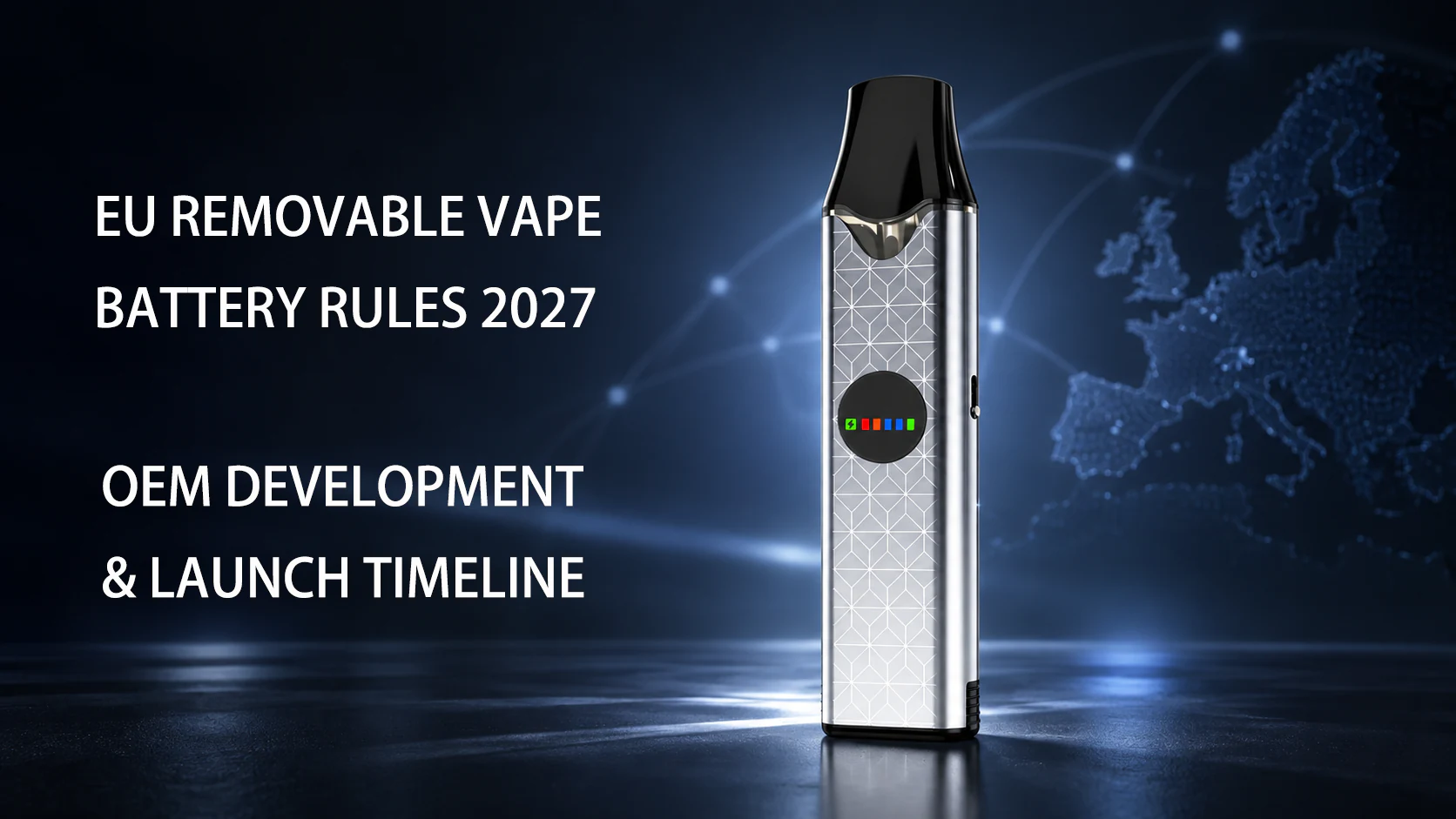
A Type-C charging port will not be enough for many vape products entering the European Union from February 18, 2027. Under Article 11 of Regulation (EU) 2023/1542, portable batteries incorporated into products must generally be readily removable and replaceable by the end user during the product’s lifetime.
This requirement affects more than the charging system. It can change the battery connection, enclosure, fasteners, safety controls, user instructions, replacement-battery supply, and the overall device architecture.
Vape brands developing EU products should address these points before the housing, internal stack, tooling, artwork, and notification files are locked. A late redesign can force changes across both the device and its supporting documentation.
What Changes on February 18, 2027?
Article 11 of the EU Batteries Regulation becomes applicable on February 18, 2027. The regulation covers batteries sold separately and batteries incorporated into products. A portable battery is generally a sealed battery weighing 5 kg or less that does not fall into the industrial, electric-vehicle, light-means-of-transport, or starting-battery categories.
The general rule requires the person placing a product containing a portable battery on the EU market to ensure that the complete battery can be removed and replaced by the end user. The European Commission’s updated 2026 guidance specifically mentions electronic cigarettes when discussing the fire risk created when small lithium batteries enter mixed waste streams. The guidance states that portable batteries should be removable and replaceable by the end user, or by an independent professional where a valid derogation applies. Electronic cigarettes are not listed as a general product exemption in Article 11 or in the additional product categories published by the Commission in 2026.
Brands should still confirm the final interpretation for each device with their EU responsible market party or compliance adviser. The Commission guidance supports harmonized application but is not legally binding, and the final interpretation of EU law remains with the Court of Justice of the European Union.
Rechargeable Does Not Mean Removable
A rechargeable vape and a vape with a replaceable battery are not the same product. Type-C charging allows energy to be restored without opening the device. It says nothing about whether the battery can be taken out and substituted.
If the cell is welded or soldered into the internal assembly, enclosed behind a housing that must be broken, or secured with adhesive that requires heat or solvent, adding a charging port does not resolve the Article 11 design question.
| Term | What It Means | Does It Address Article 11? |
|---|---|---|
| Rechargeable device | The installed battery can be charged again. | Not by itself. |
| Replaceable pod | The e-liquid pod can be removed from the device body. | Not by itself. |
| Removable battery | The complete battery can be taken out without destroying the battery or device. | It addresses the removal requirement. |
| Replaceable battery | The removed battery can be substituted with a compatible battery without affecting function, performance, or safety. | It addresses the replacement requirement when the full conditions are met. |
Why GG-VAPE Is Raising This During European ODM Development
GG-VAPE now raises battery architecture during the concept stage of European ODM projects. We often recommend that brands consider a reusable device body with a replaceable pod instead of building the next EU program around a sealed all-in-one format.
This approach separates the consumable pod from the reusable electronic section. It can reduce the number of batteries discarded with depleted e-liquid components and gives the engineering team more room to plan a longer-life device body, replacement pods, battery access, and after-sales support as one system.
However, a replaceable pod does not automatically create a replaceable battery. The battery inside the reusable device must still be evaluated separately. A pod may detach while the battery remains soldered inside a sealed enclosure. In that case, the product has addressed the pod architecture but not necessarily the Article 11 battery requirement.
For this reason, our recommendation to European brands has two parts: consider the replaceable-pod route early, and design the device body around an appropriate removable and replaceable battery solution unless the responsible market party confirms that a specific derogation applies.
Buyers can review the broader replaceable pod system OEM category to understand the product architecture. Existing platforms should not be assumed to meet the 2027 battery rules without a model-specific engineering and compliance review.
Two current GG-VAPE platforms are built around a battery the user can take out by hand. The B11 removable battery pod system holds an 800mAh battery behind a magnetic side cover. The BN12 slim refillable pod system releases its 650mAh battery through a bottom clip.
Both use empty refillable pods, and spare batteries and pods can be ordered as separate lines. Each model still needs the same model-specific Article 11 review before an EU launch.
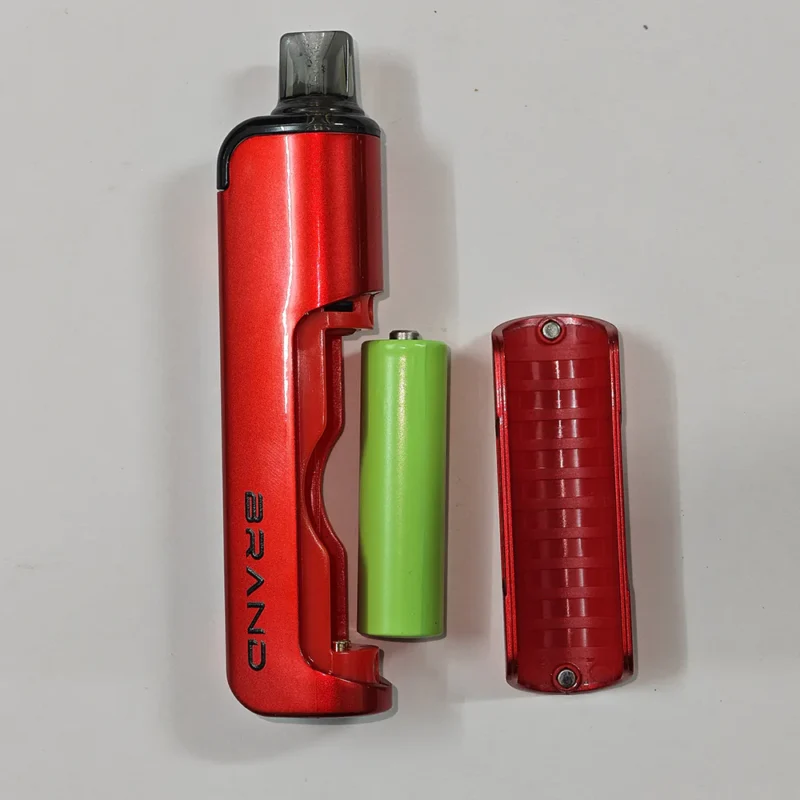
B11: the 800mAh battery lifts out after the magnetic side cover comes off.
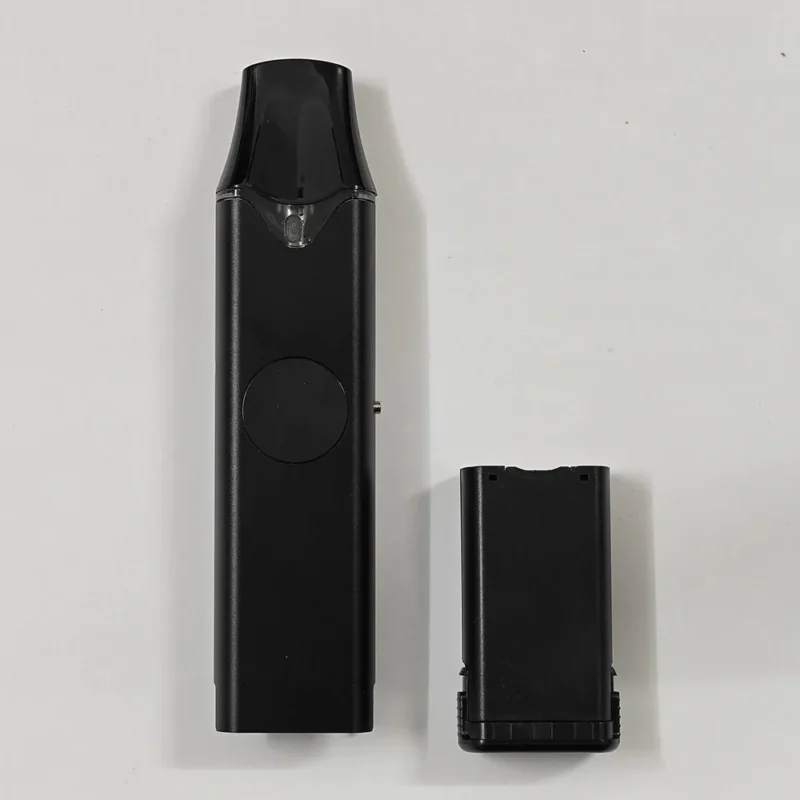
BN12: the 650mAh battery slides out once the bottom clip is released.
What Counts as Readily Removable and Replaceable?
The regulation does not require every battery to come out without tools. Commercially available tools may be used. A specialized tool may also be required if it is supplied free of charge with the product. Tools that only the manufacturer can supply should not be required, and the removal process must not depend on thermal energy or solvents.
The Commission’s guidance adds an important practical test: removal and replacement should avoid damage to both the battery and the device. After removal, another compatible battery must allow the product to continue operating without affecting its function, performance, or safety. The end user is understood to be an adult without specific battery-repair experience or qualifications. This means the design process must consider incorrect orientation, exposed contacts, short-circuit risk, battery fit, connector protection, enclosure closure, and clear instructions. For compact vape products, a protected and keyed battery module may be more practical than exposing an unprotected pouch cell, but that choice requires product-specific engineering and safety validation.
Replacing the Pod and Replacing the Battery Solve Different Problems
| Design Area | Replaceable Pod | Replaceable Battery |
|---|---|---|
| Component removed | E-liquid pod or cartridge | Complete battery or battery module |
| Main purpose | Separate the consumable liquid component from the device body | Allow the power source to be replaced during the device lifetime |
| Primary engineering focus | Pod connection, airflow, electrical contacts, fit, and sealing | Battery access, polarity, connectors, fasteners, insulation, and safe enclosure closure |
| Supporting supply plan | Replacement pod compatibility and availability | Compatible replacement batteries and required fasteners |
| Article 11 result | Does not establish battery compliance by itself | Can address Article 11 when removal, compatibility, safety, instructions, and spare-part duties are satisfied |
The two structures can form one coordinated EU product platform. A reusable device can accept replacement pods while also providing a safe method for replacing the battery. Brands should define both interfaces before industrial design is finalized.
Three Architecture Routes for an EU Vape Project
1. A Reusable Device With Replaceable Pods and a Replaceable Battery
This route treats the device body, pod system, and battery system as separate design layers. It gives the brand a reusable hardware platform while allowing the consumable pod and the battery to follow different replacement cycles.
The project must define the pod connection, battery module, contact design, polarity protection, access method, enclosure closure, compatible battery parameters, and user instructions together. A change in battery shape can affect the PCB position, airflow path, screen placement, and available branding area.
2. A Refillable Open System With a Replaceable Battery
An open-fill platform can also be developed around a removable battery. This route may suit brands that already sell bottled e-liquid or want a longer-use hardware format.
Battery compliance remains a separate engineering workstream. A refillable pod or tank does not change how Article 11 applies to the battery incorporated into the device.
3. A Sealed All-in-One Format for Other Destination Markets
A brand may keep a sealed all-in-one architecture for markets whose requirements and commercial demand support that format. Product configuration should be separated by destination market rather than assuming that one internal structure will suit every country.
For an EU launch planned after February 18, 2027, a sealed battery design should not move into final tooling or production without a documented assessment of Article 11 and any claimed derogation.
The Battery Cannot Be Treated as a Late Component Choice
The battery decision affects the full internal stack. Creating an access door or removable end cap after the housing has been designed may reduce structural strength, change air paths, expose contacts, interfere with the draw sensor, or leave insufficient space for insulation and fastening.
The engineering review should cover:
- Whether the complete battery or battery module can be removed safely
- Whether commercially available tools are needed
- Whether any specialized tool must be supplied with the product
- Whether heat, solvent, destructive opening, or permanent adhesive is involved
- How the design prevents reverse polarity and short circuits
- Whether electrical contacts remain protected during handling
- How the battery compartment closes after replacement
- Whether the device continues to operate safely with a compatible battery
- Which battery specifications must appear in the instructions
- Which fasteners or seals must also remain available as spare parts
These decisions belong before the tooling and validation stages. GG-VAPE’s OEM and ODM development process can include architecture review, industrial design, engineering, prototyping, validation, documentation inputs, and production planning.
Plan Replacement-Battery Supply for at Least Five Years
Article 11 does not stop at physical battery access. Portable batteries incorporated into covered products must remain available as spare parts for at least five years after the last unit of the equipment model is placed on the market. They must be available to end users and independent professionals at a reasonable and non-discriminatory price.
This creates a supply obligation that can continue long after the last production order for the device. The brand should define a battery or module identifier, safe compatible specifications, connector and polarity requirements, necessary fasteners, packaging, storage controls, replacement instructions, and responsibility for continued availability. If a fastener cannot be reused during battery replacement, the Commission guidance says that fastener should also be available as a spare part. A cosmetic battery door without a compatible replacement-battery program does not complete the planning requirement.
A Practical Development Timeline
The following schedule is a recommended OEM planning timeline. It is not a set of statutory development deadlines.
| Timing | Recommended Project Work |
|---|---|
| Now | Classify the destination market and audit the current battery connection, enclosure, fasteners, and removal method. |
| 2026 Q4 | Choose the device architecture, including the pod route, battery format, access method, connectors, and replacement controls. |
| 2026 Q4 to 2027 Q1 | Build engineering samples and validate battery removal, replacement, electrical safety, enclosure integrity, and repeated assembly. |
| Before the EU launch | Complete instructions, safety information, compatible battery specifications, online information, labels, and the spare-parts plan. |
| Before February 18, 2027 | Review market-placement and inventory timing with the EU responsible market party. |
| After launch | Maintain replacement-battery availability and compatibility records for the required period. |
Do Not Use Production Date as the Only Inventory Test
The regulation focuses on products placed on the EU market. Manufacturing a device or shipping it from the production country before February 18, 2027 does not, by itself, establish that the product was placed on the EU market before that date.
Brands holding transitional inventory should ask their EU responsible market party to document when the relevant goods are considered placed on the market. Purchase orders, production dates, shipment dates, customs dates, warehouse transfers, and retail availability do not always mean the same thing under EU product law.
Article 11 Does Not Replace TPD or Other EU Requirements
The battery rules address battery design, replacement, information, and end-of-life management. They do not replace the product and e-liquid requirements applied through the Tobacco Products Directive, national notification procedures, electrical safety work, chemical documentation, WEEE, battery EPR, or packaging obligations.
A device can follow a 2ml product format and still require battery-architecture changes. In the same way, a removable battery does not automatically make the pod, e-liquid, labeling, or notification file suitable for the target EU country.
For a wider overview, read the EU and UK vape compliance guide. EU and UK requirements should be treated as separate market paths.
Questions Brands Should Settle Before Approving an EU Design
- Will the product be placed on the EU market on or after February 18, 2027?
- Is the planned device disposable, replaceable-pod, or open-fill?
- Can an adult without repair training remove the complete battery safely?
- Does removal require heat, solvent, destructive opening, or a tool only the manufacturer can supply?
- Can a compatible battery restore full function without reducing safety?
- How will reverse polarity and exposed-contact risks be controlled?
- Which removal and replacement instructions will ship with the product?
- Where will the instructions and safety information remain available online?
- How will replacement batteries and non-reusable fasteners remain available?
- Has the EU responsible market party reviewed the final architecture?
Frequently Asked Questions
Are rechargeable vape batteries automatically compliant with Article 11?
No. Rechargeable means that the installed battery can receive another charge. Article 11 addresses whether the complete battery can be removed and replaced. A Type-C port does not make a welded or permanently enclosed battery removable.
Does a replaceable pod make the vape battery replaceable?
No. The pod and battery are separate components. A replaceable-pod system may support a longer-use EU product strategy, but the battery inside the device body still needs its own Article 11 assessment.
Can tools be required to remove the battery?
Yes. Commercially available tools may be used. If a specialized tool is required, it generally must be supplied free of charge with the product. Tools that only the manufacturer can supply, thermal energy, and solvents should not be required for end-user removal.
Are disposable vapes banned by the EU Batteries Regulation?
The Batteries Regulation does not state a general ban on all disposable vapes. It sets requirements for batteries and products that incorporate them. A vape product placed on the EU market from February 18, 2027 must be assessed against Article 11 unless a valid derogation applies.
Do the 2026 additional derogations include electronic cigarettes?
Electronic cigarettes are not one of the additional product categories listed in the Commission’s July 2026 delegated act. The updated Commission guidance instead names electronic cigarettes when discussing the importance of removing small lithium batteries from products before waste treatment.
Must replacement batteries remain available after the device is discontinued?
Yes, for covered products placed on the market from February 18, 2027. Article 11 requires compatible batteries to remain available as spare parts for at least five years after the last unit of the equipment model is placed on the market.
Does Article 11 automatically apply across the United Kingdom?
No. Regulation (EU) 2023/1542 is an EU regulation and should not be presented as one EU-and-UK rule. Great Britain follows a separate regulatory path, while products intended for Northern Ireland require a market-specific assessment.
Should brands redesign projects that are already under development?
They should review them now if EU market placement is planned on or after February 18, 2027. Battery access can affect the housing, internal stack, PCB, electrical contacts, airflow, insulation, instructions, validation work, and spare-parts plan.
Plan the Architecture Before Tooling and Artwork
The 2027 requirement is not a charging-port update. It changes how the battery is fixed, accessed, replaced, documented, and supplied after launch.
GG-VAPE recommends that European ODM customers consider the replaceable-pod route during the first design discussion, while also developing a separate solution for battery removal and replacement. Addressing both systems before tooling gives the brand a clearer path than attempting to reopen a sealed design shortly before market entry.
Send GG-VAPE your target EU country, planned launch date, preferred device architecture, pod format, and current design files. We can review the manufacturing implications and identify the questions that should be confirmed with your EU responsible market party before development is locked.
Discuss Your EU Vape OEM/ODM Project
This article provides general product-development information and does not constitute legal advice. The brand owner, importer, or other responsible economic operator should confirm the final regulatory assessment for the specific product and destination market.