



Industry Insights
2026 European Vape Market Outlook: Why Generic Is Losing Shelf Space

By Leo Chen, Factory Director, GG-VAPE
The European vape market is not shrinking. It is sorting.
Volume that used to move on price alone is now moving toward brands that can document what they sell. Retailers who once stocked whatever cleared customs are asking for test reports at the buyer meeting. The products getting delisted are not the bad ones — they are the undocumented ones.
For anyone planning a production run for 2026, that shift changes what you should be specifying. This outlook covers what moved on the buyer side, and what it means for your next order.
What Closed the Generic Window
There was a period, roughly 2019 to 2022, when European shelves were open to almost anything with a recognizable flavor and a workable price. That period is over, and three things closed it.
Enforcement caught up with the market. Notification databases are now cross-checked against what is physically on shelves. A product that was never notified is a liability the retailer carries, not the importer.
Retail buyers changed what they ask for. Documentation used to be requested after a problem. It is now requested before the first order. A range without a paper trail does not reach the shelf conversation.
Format rules removed a whole category. Disposable bans across several markets pushed volume into pod systems and refillables, which reset who the leading suppliers are in each category.
What the market rewards now is a product configured for your brand, built under controlled conditions, and supported by the evidence a European buyer will ask to see.
Five Signals to Read Before You Spec Your Next Run
1. Format Is Set by Regulation, Not Preference
For EU and UK sale, pre-filled capacity sits at 2ml and nicotine at 20mg/ml under the TPD Article 20 format, and every nicotine liquid must be notified through EU-CEG before it goes on sale. Those numbers belong in the brief on day one. Reworking a design that was never built to the destination format costs more than tooling it correctly the first time.
Volume built for the Gulf, Southeast Asia, Africa, or the Americas follows the standards of those destination markets instead — a different spec, and a decision to make before you order, not after.
2. Coil and Nicotine Format Decide Your Filing, Not Just the Draw
Ceramic has become the common specification for EU-bound devices because emissions results hold steadier across a batch, and a steady result is what your notification file has to describe.
On nicotine format, salt formulations dominate the European pod market for a structural reason: with 20mg/ml as the ceiling, salt delivers satisfaction at that concentration without the throat harshness freebase produces at equivalent strength. For most pod form factors aimed at Europe, salt is the default answer. The full comparison sits in our nicotine salts vs freebase guide.
3. Documentation Is Now a Sales Asset
CE declarations, RoHS reports, MSDS, battery test reports. UK retailers ask for these at onboarding and EU distributors will not list without them. The practical test of a supplier is not whether the documents exist but how fast they arrive when you ask. A file assembled after the request is a file that was not ready.
4. Packaging Rules Are a Design Brief
EU and UK packaging has to carry health warnings, nicotine declarations, and labeling in the destination language. Brands that win shelf space design the layout around those elements from the start rather than cramming them onto a back panel at the last artwork revision.
5. Supplier Experience Shows Up in What They Flag
A manufacturer that ships to Europe and one that understands the European regulatory picture behave differently at the same moment. The first sends what you ordered. The second tells you, before the container books, that the artwork is missing a declaration for one of your destination markets.
Notification itself belongs to the brand owner or importer — a factory cannot hold your filing. What it can do is have the technical data ready and raise the gap while it is still cheap to fix. For the full picture on how to test a supplier before you commit, see how to choose a vape OEM manufacturer.
What a Working OEM Partnership Looks Like
The sequence is consistent across a well-run project. You brief the requirements — device type, capacity, puff count, destination market. The manufacturer proposes suitable base models from an existing certified lineup, which cuts development time against starting from a blank sheet. You review samples, confirm the specification, and sign off artwork. Production QC runs on the factory side, and you receive retail-ready goods with the documentation package your market needs.
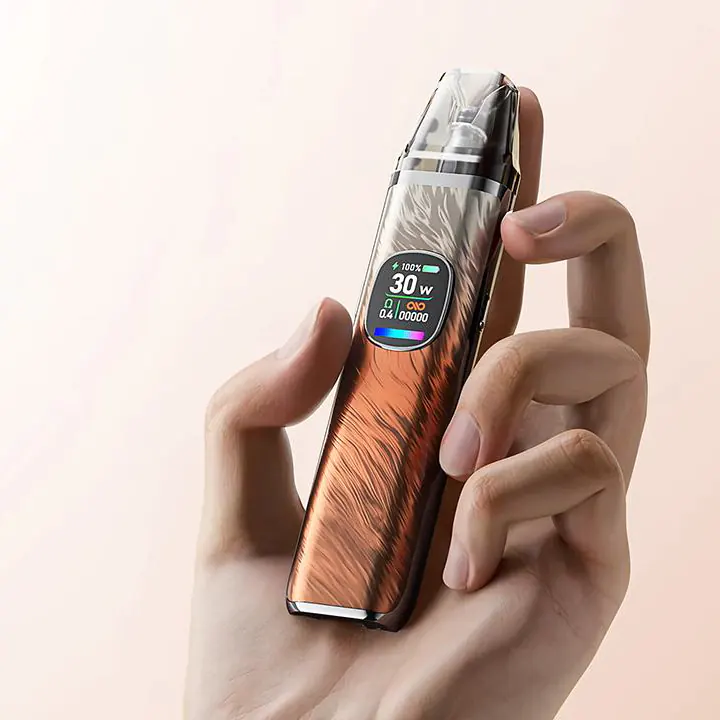
At GG-VAPE the range spans 2ml pods in the TPD Article 20 format through to high-capacity devices built to the standards of the destination market, with OEM customization across the line — transparent casing, display variants, refillable configurations, DTL airflow designs. Broad enough that most brand concepts run without new tooling.
Volume thresholds are worth knowing before you plan a range. Custom hardware runs start at 10,000 units per model, and within that total each color needs at least 2,000 units, because a color change means a separate injection run. E-liquid carries its own floor at 1,000 bottles per flavor. Those two numbers, taken together, are why most successful European launches start with one hero device in three or four flavors rather than a twenty-flavor range that ties up cash before the market has answered.
The Timeline to Plan Around
Launch dates slip for predictable reasons. A realistic first run looks like this:
Sample confirmation runs 1–2 weeks. Production is Typically 25–30 Days after artwork and specification sign-off, and a newly tooled housing adds a 60–75 day development stage before that clock starts. Sea freight from China to Europe takes 4–6 weeks. EU-CEG notification processing can take up to six months.
That last number is the one that decides your launch date. Start notification the week you confirm your specification, not the week your container arrives. Brands that run the two tracks in parallel sell the day they clear customs. Brands that run them in sequence sit on stock waiting for clearance.
Where This Leaves a 2026 Plan
The European market is tightening, not closing. Regulatory pressure raises the floor for what counts as a credible brand, and a raised floor is precisely the environment where a well-prepared entrant takes ground from an unprepared incumbent.
If you have a concept and need a manufacturing partner who works to European requirements, the useful first step is a specification conversation.
OEM and ODM services → | Product catalog →
Ready to source vape hardware, empty pods, or start your OEM/ODM project?
Contact our team directly:
- WhatsApp: +86-134-1240-5657 (fastest response)
- Email: [email protected]
We respond within 24 hours. Sample orders welcome.
🔗 Related Reading
- How to Launch a Vape Brand in 2026: A Realistic Playbook
- EU & UK Vape Compliance 2026: TPD, EPR and OEM Guide
- How to Choose a Vape OEM Manufacturer: The Complete Guide
- Nicotine Salts vs Freebase: What OEM Buyers Need to Know
For trade and wholesale enquiries only. Products contain nicotine. Not intended for retail consumers. Adults 18+ only.