



Industry Insights
How to Launch a Vape Brand in 2026:A Realistic Playbook for First-Time Founders

Every week someone reaches out to us saying some version of the same thing: “I want to start a vape brand. I have some money. I don’t know where to begin.” Fair enough. The barrier to entry in this industry is lower than most people think — but the number of ways to waste your budget is higher than most people expect. I’ve watched first-time founders blow through $30,000 before selling a single unit because they made decisions in the wrong order.
This isn’t a motivational post about “following your passion.” This is the sequence of decisions that actually matters when you’re building a vape brand from zero, based on what I’ve seen work (and fail) over years of manufacturing products for startups and established distributors alike.
Step 1: Pick a Market Before You Pick a Product
This sounds backward to most people. They start with the product — “I want to make a cool disposable vape” — and then try to figure out where to sell it. That’s backwards. Start with geography. Where are you going to sell? The answer to that question determines everything that follows — what products are legal, what nicotine levels are permitted, what packaging requirements exist, what certifications you need, and what price points the market will bear. A few examples to illustrate why this matters:
Germany: Strong vape market, but TPD regulations are strictly enforced. Tank capacity maxed at 2ml, nicotine at 20mg/ml. Tax stamp required on every unit. German consumers tend to prefer established brands and are willing to pay premium prices for quality.
United Kingdom: One of the most developed vape markets in the world. MHRA notification required before you can sell. The government has been broadly supportive of vaping as a smoking cessation tool, but new legislation targeting disposables (particularly around youth access and environmental waste) is reshaping the landscape.
Saudi Arabia and UAE: Growing markets with increasing demand. Regulations are evolving. Import requirements can be complex, and you’ll need local distribution partnerships to navigate customs effectively.
United States: Massive market, but FDA PMTA requirements make legal entry extremely difficult and expensive for new brands. Many operate in a gray area. If you’re considering the U.S., understand the legal risks before you commit capital.
West Africa and East Africa: Emerging markets with low regulatory barriers and fast-growing demand. Price sensitivity is high. Brands that offer reliable quality at competitive price points can gain market share quickly.
Don’t try to sell everywhere at once. Pick one or two markets, understand them deeply, and build from there.
Step 2: Understand Your Regulatory Obligations
I covered this in our compliance-focused articles, but it bears repeating here because I’ve seen it sink brands. Before you spend a single dollar on product development, answer these questions:
- Is vaping legal in my target market?
- What nicotine limits apply?
- Do I need to register or notify a regulatory body before selling?
- Are there packaging and labeling requirements (health warnings, child-resistant packaging, language requirements)?
- Are there advertising restrictions that affect how I can market the product?
- Are there import duties or excise taxes that affect my landed cost?
If you can’t answer all of these, you’re not ready to order product yet. And that’s not a criticism — it’s just reality. Getting a shipment seized at customs because your packaging doesn’t have the right warning labels is an expensive lesson that’s entirely avoidable. We help our manufacturing clients with compliance guidance as part of the process. We’re not a law firm, but we know what TPD-compliant packaging looks like, we know what MHRA notification involves, and we can build your product to meet the technical requirements of your target market.
Step 3: Decide on Your Product Category
Now — and only now — should you think about what you’re actually going to sell. Based on where you’re selling and who you’re selling to, your options will narrow naturally. But here’s a general framework:
Disposable Vapes — The Volume Play
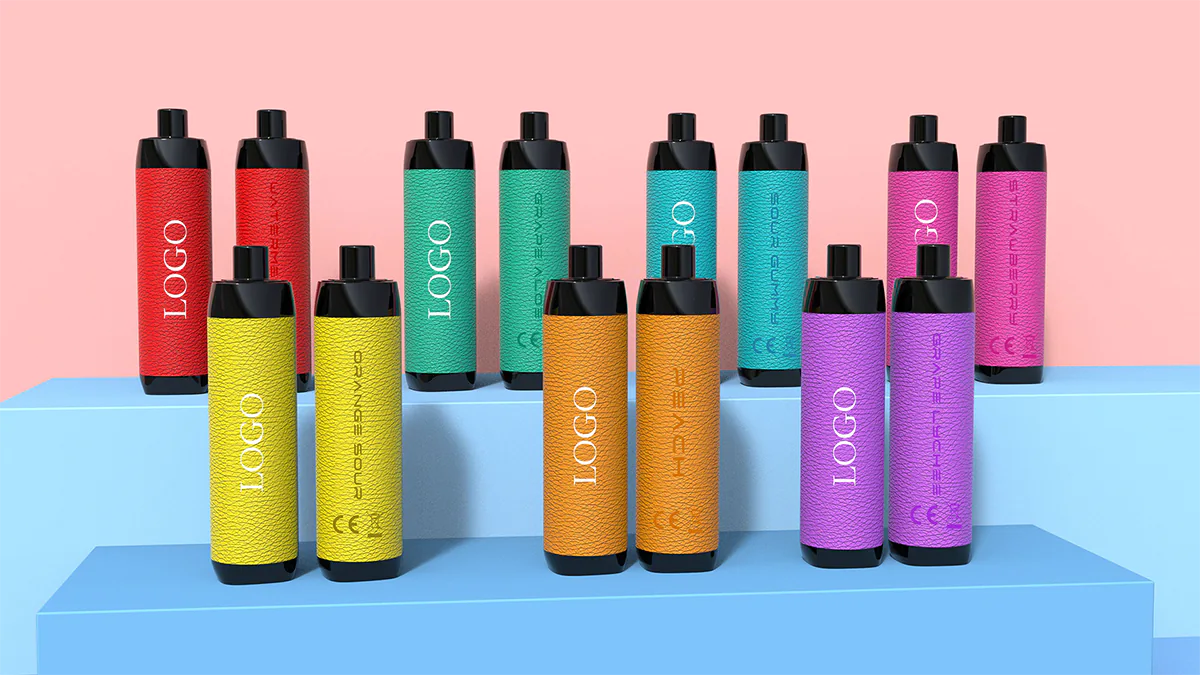
Lowest barrier to entry. Highest unit volume. Margins are thinner per unit but the velocity makes up for it. If you’re starting with limited capital and want to generate revenue quickly, custom-branded disposables through an ODM model are probably your best bet. We have proven designs ready to go — you choose the specs, the flavors, the branding, and we produce. Puff counts, battery sizes, flavor counts, packaging style — all customizable. We can have samples in your hands within 2–3 weeks.
Pod Systems — The Retention Play
Pod systems have a higher initial purchase price but create recurring revenue through pod refills or replacements. Customers who buy into your pod ecosystem tend to stick around longer than disposable buyers. The tradeoff: it takes more upfront investment to develop a pod system (especially OEM), and you need to maintain flavor inventory to keep your customers supplied.
E-Liquids — The Margin Play
Bottled e-liquid has some of the best margins in the industry. Production costs are relatively low, and flavor variety creates natural opportunities for repeat purchases and upselling. The challenge is that the bottled e-liquid market is mature and competitive. You need strong branding, creative flavor development, and effective distribution to stand out.
My Suggestion for First-Time Founders
Start with disposables. Seriously. They’re the fastest path to market, the lowest risk, and they’ll teach you how the supply chain, distribution, and retail dynamics of this industry actually work. Once you have revenue coming in and relationships with distributors or retailers, you can expand into pods or bottled e-liquid from a position of strength.
Step 4: Sort Out Your Brand Identity
Your product is going to sit on a shelf (physical or digital) next to dozens of competitors. What makes someone pick yours up? At this stage you need, at minimum:
- A brand name that’s not already trademarked in your target market. Check this before you fall in love with a name. Seriously.
- A logo and visual identity. Color palette, typography, design language. This doesn’t need to be expensive — a skilled freelance designer can handle it — but it needs to feel intentional and consistent.
- Packaging design. This is more important than most founders realize. In markets where advertising is restricted (which is most vape markets), your packaging is your primary marketing tool. It needs to communicate quality, comply with regulations, and stand out visually.
We handle packaging design and printing in-house. If you come to us with brand guidelines, we’ll translate them into production-ready packaging. If you don’t have brand guidelines yet, we can work with your concepts and help refine them. One piece of advice: don’t overthink this stage. I’ve seen founders spend six months perfecting a logo while their competitors were already selling product. Get it to “good enough,” launch, and refine as you go. Your V2 packaging will always be better than your V1 — that’s normal.
Step 5: Find the Right Manufacturing Partner
Obviously I’m biased here, but I’ll try to be objective about what you should look for regardless of whether you work with us.
Direct factory vs. trading company: Work with a factory whenever possible. Trading companies add a markup without adding manufacturing capability. They’re middlemen. When something goes wrong in production (and eventually something always does), you want to be talking directly to the people on the factory floor, not a broker relaying messages.
Communication quality: How fast do they respond? Do they ask smart questions about your target market and requirements, or do they just quote you a price? The quality of the pre-sale conversation usually predicts the quality of the manufacturing relationship.
Sample process: A good manufacturer insists on the sample approval stage. If someone offers to skip straight to mass production, walk away. Samples cost time, but they save you from shipping 50,000 units of a product that doesn’t work right.
Compliance capability: Can they build products that meet your market’s regulations? Do they understand TPD? Can they produce child-resistant packaging? Do they have the certifications to back it up?
Scalability: Your first order might be small. That’s fine. But can this factory grow with you when demand picks up? Ask about production capacity and lead times at 10x your initial volume.
At GG-VAPE, our minimum order quantities are structured to be accessible for startups while our production capacity can handle large-volume orders for established distributors. We’ve built relationships with clients that started at 5,000 units and now order six figures per quarter.
Step 6: Place Your First Order (And Learn From It)
Your first production run will not be perfect. Accept that now and you’ll save yourself a lot of stress. Here’s what a realistic first order looks like:
- ODM disposable vapes: 3–5 flavors, modest puff count (2,000–5,000 range is a safe bet for most markets), your branding and packaging.
- Quantity: Enough to test the market without overcommitting. For most startups, that’s somewhere between 5,000 and 20,000 units total across all SKUs.
- Timeline: From first conversation to delivered product, expect 4–8 weeks depending on customization level and shipping method.
When the product arrives, don’t just throw it all to your distributor. Keep some units for yourself. Vape them. Give them to people and ask for honest feedback. Track which flavors sell faster. Note any issues. This data is gold. It informs your second order, which will be better — different flavor mix, adjusted nicotine strength, improved packaging, whatever the market told you to change.
Step 7: Distribution — The Part That Actually Makes or Breaks You
You can have the best product in the world, but if nobody can buy it, you don’t have a business. Distribution channels vary by market, but the main ones are:
Vape shops (brick and mortar): Still the primary retail channel in most countries. Getting shelf space requires either direct relationships with shop owners or working with established distributors who already have those relationships.
Online / e-commerce: Your own website, plus marketplaces where permitted. Note that many platforms (Amazon, Facebook Marketplace, etc.) restrict or ban vape product sales. You’ll likely need a standalone Shopify or WooCommerce store with age verification and a payment processor that handles vape transactions — which is a smaller list than you’d expect.
Distributors and wholesalers: This is how most new brands get scale. Find distributors in your target market who already have retailer relationships and logistics infrastructure. You sell to them at wholesale; they handle retail distribution.
Direct import partnerships: In some markets (particularly the Middle East and Africa), the most effective model is partnering with a local importer who handles customs, warehousing, and distribution in-country.
Whatever channel you pursue, understand that distribution relationships take time to build. Start reaching out to potential partners before your first production run ships. The worst-case scenario is having product sitting in a warehouse with nobody to sell it to.
Common Mistakes I See First-Time Founders Make
Let me save you some tuition in the school of hard knocks:
Too many SKUs at launch. You don’t need 15 flavors on day one. Start with 4–6 strong flavors, learn what sells, then expand. Every additional SKU increases your inventory risk and complicates logistics.
Ignoring compliance. “We’ll figure out the regulations later” is a sentence that has preceded many expensive disasters. Figure it out first.
Over-investing in branding, under-investing in product quality. A beautiful package containing a mediocre vape is a one-time purchase. A decent package containing a great vape is a repeat customer.
Not understanding landed cost. Your cost isn’t just the factory price. It’s factory price + shipping + customs duties + import taxes + warehousing + distribution margins. If you don’t calculate your true landed cost, you can’t set profitable retail prices.
Trying to compete on price alone. In a race to the bottom, the factory always wins because they can sell direct. Compete on brand, on customer experience, on distribution, on market knowledge — not on who can sell the cheapest disposable.
What a Realistic Budget Looks Like
I hate vague advice, so let me give you actual numbers (rough ranges — specifics depend on product type, market, and order size).
| Expense | Estimated Range |
|---|---|
| Brand identity (logo, design, packaging artwork) | $500 – $3,000 |
| Samples and prototyping | $200 – $1,000 |
| First production run (5,000–10,000 disposable units, ODM) | $20,000 – $40,000 |
| Compliance and regulatory fees (TPD notification, MHRA, etc.) | $1,000 – $5,000 per market |
| Shipping and customs | $1,000 – $5,000 depending on volume and destination |
| Website and basic e-commerce setup | $500 – $2,000 |
| Initial marketing and trade samples | $1,000 – $3,000 |
| Total realistic starting budget | $40,000 – $80,000 |
Can you start with less? Sometimes. Can you spend more? Easily. But this range covers what most of our startup clients invest before their first sale.
One Last Thing
Starting a vape brand isn’t glamorous. It’s logistics, spreadsheets, compliance paperwork, and a lot of WhatsApp messages with manufacturers and distributors across time zones. But if you’re methodical about it — right market, right product, right manufacturing partner, right distribution — it’s a genuinely viable business. The global vaping market is still growing, regulations are creating barriers that keep out unserious competitors, and there’s real demand for quality products with credible branding.
We’ve helped dozens of first-time founders go from “I have an idea” to “I’m placing my third reorder.” The process works. It just requires doing things in the right order and being honest with yourself about what you don’t know yet.
If you’re at the beginning of this journey and want a straight conversation about whether your plan makes sense, reach out. No pressure, no minimum commitment. Just a practical discussion about what’s realistic.
GG-VAPE is a custom vape manufacturer offering OEM and ODM production for disposable vapes, pod systems, e-liquids, and accessories. We work with startups, independent brands, and established distributors across Europe, the Middle East, Africa, Asia-Pacific, and the Americas.