



Industry Insights
Custom Vape Manufacturing (OEM/ODM): A Practical Guide for Global Brands

OEM vs. ODM: Choose the Model That Matches Your Project
Branding: What You Can Print, and What You Need First
Before artwork goes to plate, one question decides everything else: whose name goes on the product. There are three routes, and they carry different requirements.
| Route | What we print | What you provide |
|---|---|---|
| Unbranded / white label | No brand marks. Device and packaging stay neutral. | Nothing. Specification only. |
| Self-applied labeling | Neutral goods. You apply your own labels after delivery. | Nothing from us. Labeling responsibility sits with you. |
| Printed brand | Your mark printed or engraved on device and pack. | A registered trademark certificate, or written authorization from the mark’s owner. |
Why We Ask for the Certificate
We do not print a mark the buyer cannot show title to. That rule protects both sides. Goods carrying a mark you do not own can be held at customs, pulled by a retailer, or challenged by the actual rights holder — and by then the inventory is already paid for.
A pending application is not a registration. If your filing is still in examination, the practical route is neutral goods now with your own labels applied after delivery, and printed branding on the next run once the certificate issues. That protects your launch date without putting the inventory at risk.
Authorization works the same way as ownership. If you are producing under someone else’s mark, through a distribution or licensing arrangement, send the written authorization from the rights holder and we treat it as we would a certificate.
Register the Mark and the Product in Parallel
Trademark registration and product notification are separate tracks, and both run longer than production. Neither has to wait for the other, and neither should wait for your goods to arrive.
Trademark. Register in the markets where you will actually sell. A mark registered in one jurisdiction gives you nothing in the next one. Start as soon as the brand name is settled.
Product notification. Requirements are set per market, not globally:
- EU — nicotine-containing products are notified through EU-CEG to the competent authority of each member state. The submission is due six months before you intend to place the product on that market, so the deadline sits well ahead of your production schedule.
- UK — the MHRA handles notification under TRPR. Northern Ireland stays on the EU track, so selling across both means both filings.
- UAE and the wider Gulf — registration and conformity requirements are set nationally and differ between markets. Confirm the current position for each destination before you commit stock.
Who carries the obligation depends on your role in the chain. Under UK rules a producer includes the manufacturer, the importer, and any business reselling the product under its own brand — so putting your name on a device generally puts the notification duty on you as well. Confirm your own position with your regulatory adviser rather than assuming the factory absorbs it.
What we supply is the technical data those filings draw on: ingredient and emissions data, test reports, and device specifications.
The practical sequence: settle the brand name, start the trademark filing, confirm the specification, open the notification file, and run sampling and production alongside all three. Brands that treat these as a queue lose months. Clearing customs is not the same as being cleared to sell — notification, registration, and retailer onboarding each have their own clock, and they only overlap if you start them early.
Start With the Spec That Actually Drives Repeat Sales
A product requirements document does not need to be elaborate. It needs to be specific where it counts.
1) Device Format and User Experience
Decide the format first. These differ by how the liquid gets in and whether it leaves the factory filled:
- Disposable — filled and sealed at the factory, used until empty. Fewest project variables.
- Pre-filled replaceable pod — device plus factory-filled cartridges. Two SKUs to manage, and the cartridge becomes its own reorder line.
- Refillable — shipped empty, filled by the retailer or the end user. No liquid in the hardware order.
Then define the experience:
- Draw style: tight MTL or a looser draw
- Activation: auto-draw, button, or both
- Feedback: indicator behavior, charging cues where the device is rechargeable
2) Performance Targets
Be explicit about what will be measured:
- seal integrity under the temperature swings of long transit
- draw consistency from first puff to last
- output stability across the life of the device
- finish durability — coating wear and scratch resistance
3) E-liquid and Nicotine
Your destination market sets what is possible. Confirm early:
- nicotine type — freebase or salt
- strength options permitted in that market
- PG/VG ratio, which drives throat feel, vapor, and how flavor carries
Selling across several regions, build the lineup with regional variants rather than forcing one formula everywhere. Our e-liquid is produced under GMP- and ISO 9001-controlled processes, and each production run is filled from a single blended batch.
4) Flavor Direction
Flavor names matter less than profiles:
- sweetness level
- cooling level — none, light, or strong
- intensity — subtle or punchy
- finish — clean or lingering
The practical move: pick a core set of 6–12 profiles that fit your audience, then expand once batch consistency is proven. Each flavor carries its own floor of 1,000 bottles, so flavor count drives inventory faster than most first-time brands expect.
MOQ and Timeline Planning
Custom hardware runs start at 10,000 units per model. Within that total, each color needs at least 2,000 units, because a color change means a separate injection run. Decide your colorway count before you ask for a quote, not after.
Mass production on an existing device platform is Typically 25–30 Days after the required approvals are complete. New housing and mold development takes 60–75 days before mass production, followed by the same Typically 25–30 Days production stage.
For bottled e-liquid OEM projects, the minimum is 1,000 bottles per flavor.
Quality Control: What Serious Brands Require
A clean-looking device means nothing if the return rate climbs. Our chain runs IQC → IPQC → FQC → OQC, with 20 checkpoints spread across the four stages.
IQC — Incoming Materials
- cells, coils, plastics, seals, and packaging components checked before anything reaches the line
- batch labeling and traceability established at intake
IPQC — In Process
- assembly alignment and sealing points
- fill accuracy where applicable
- airflow and coil resistance checks
FQC — Finished Goods
- seal integrity checks
- draw consistency testing
- functional testing
OQC — Outgoing
- carton-level sampling before the container seals
- packaging integrity for transit
These are the in-process steps behind the IPQC line:
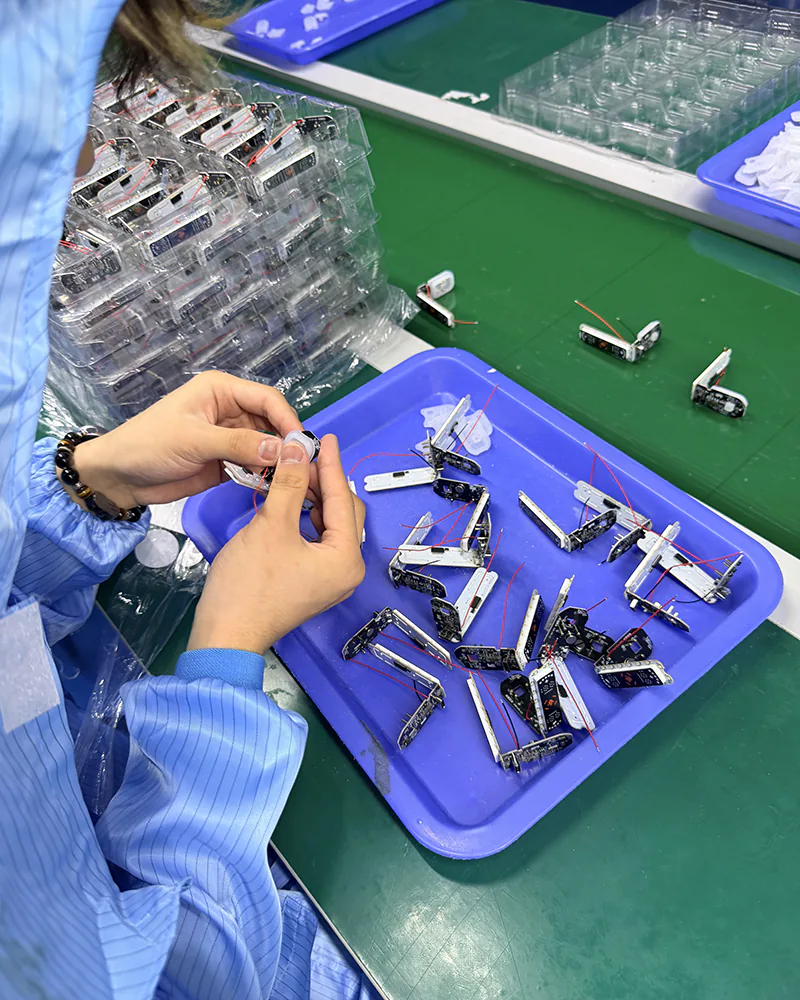
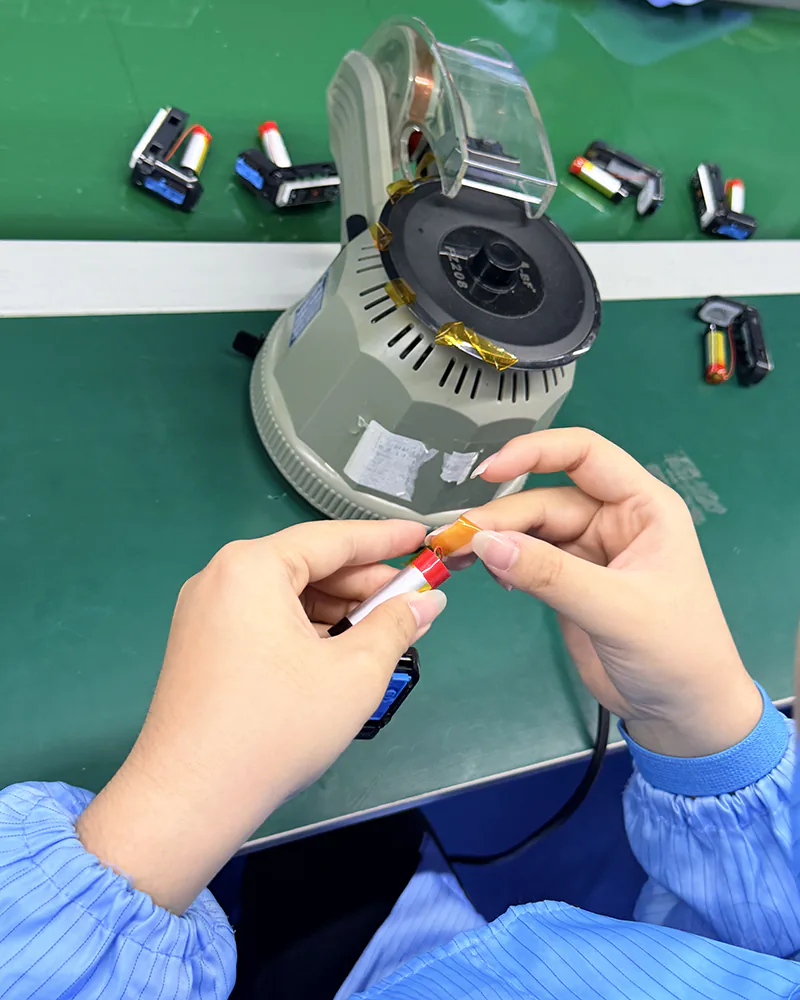
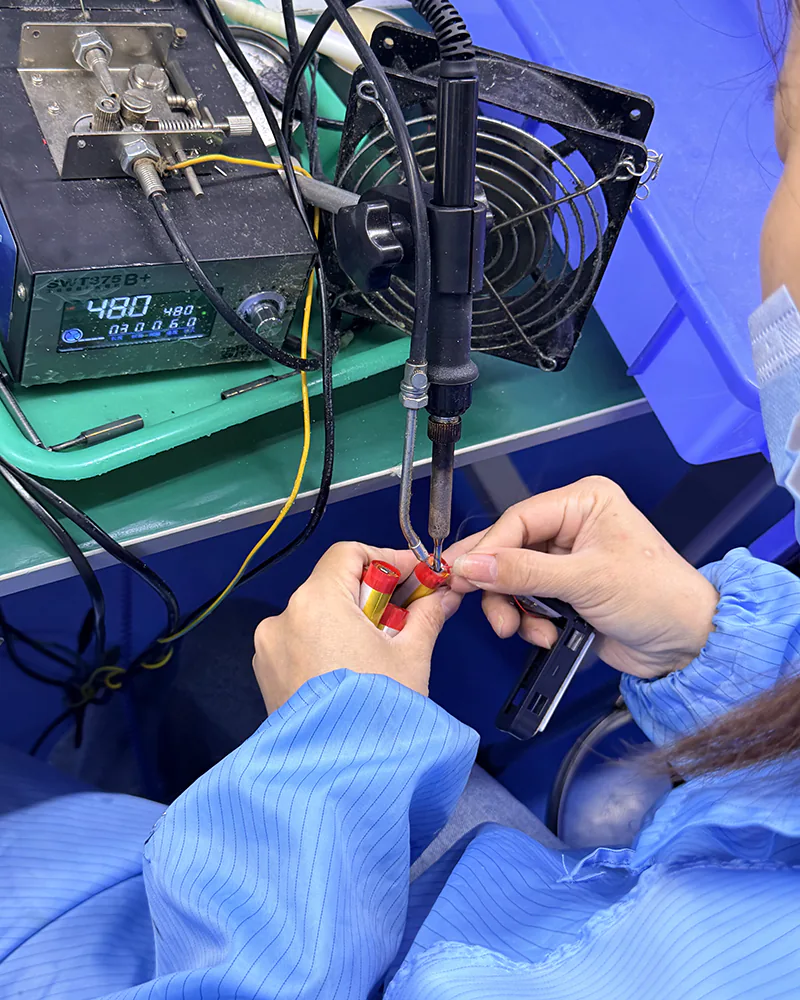
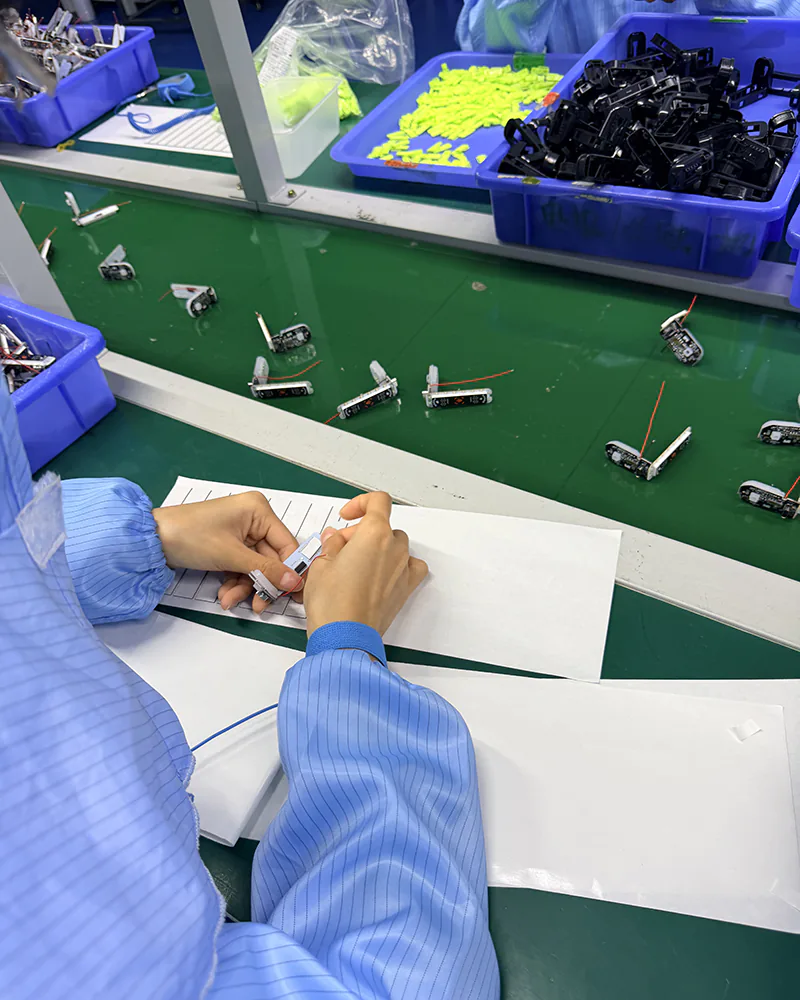
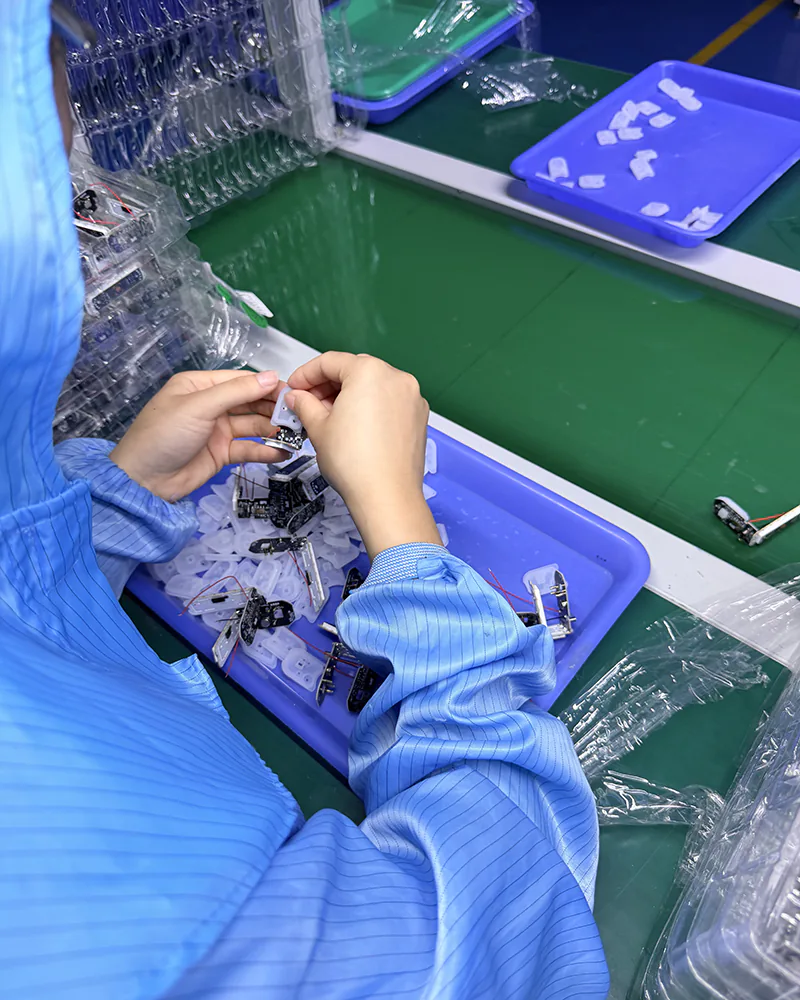
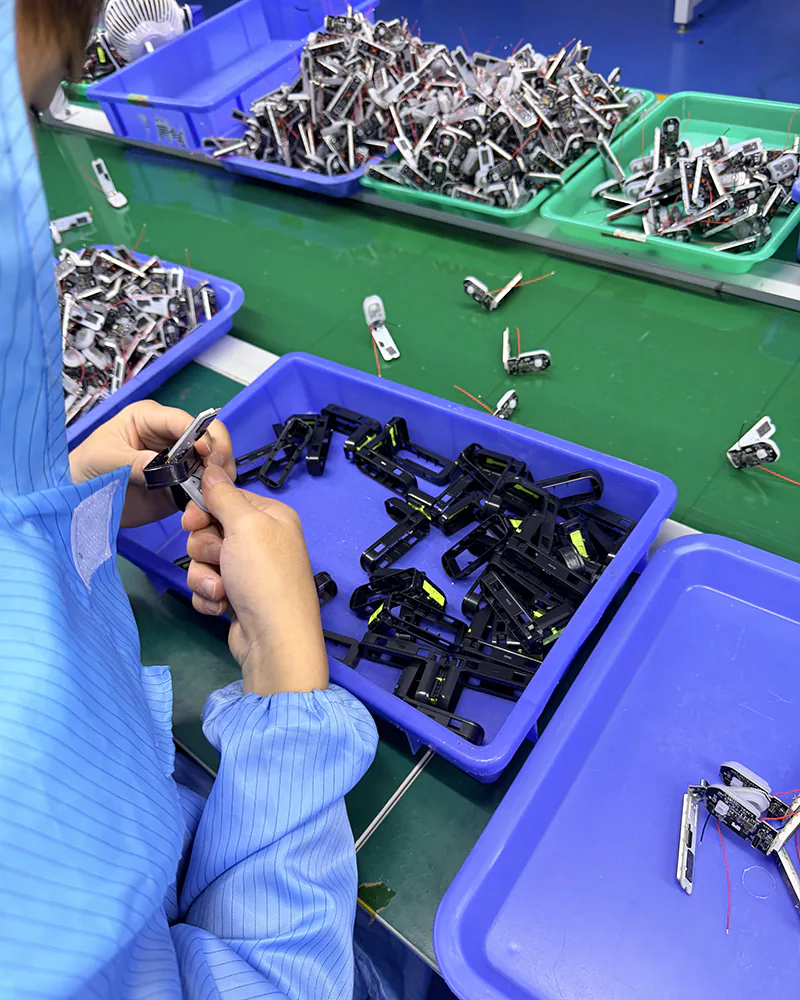
If you plan to scale, insist on batch traceability. When something goes wrong, and eventually something will, traceability turns a recall into a controlled fix.
What to Send to Start an OEM/ODM Quote
To move quickly, send:
- target country or region, and sales channel — retail, wholesale, online
- device format — disposable, pre-filled replaceable pod, or refillable
- desired puff range or usage goal
- nicotine type and strength options required
- number of flavors and flavor direction — sweetness and cooling level
- branding route — unbranded, self-labeled, or printed brand with trademark certificate
- packaging needs — languages, warnings, anti-counterfeit
- expected first order volume and reorder forecast
- target ship date and preferred shipping terms
For the full process, including tooling and validation stages, see our OEM and ODM services page.
Frequently Asked Questions
What is the difference between private label and OEM/ODM?
Private label keeps an existing platform and core specification as they are, and changes the brand presentation. OEM starts from requirements you define and can include new housing or tooling built for your project. ODM sits between them: an existing platform, customized on branding, color, liquid, and packaging.
Can you print my brand on the device?
Yes, with a registered trademark certificate or written authorization from the mark’s owner. Without one, we ship neutral goods and you apply your own labels after delivery.
How do you handle seal performance during shipping?
Sealing is a system rather than a single part: seal design, material selection, fill control, airflow structure, and finished-goods testing. Ask for the test report on the specific configuration you are ordering.
Can I customize nicotine strength for different regions?
In most cases yes, within what the destination market permits. Most global brands run separate SKUs by region rather than forcing one universal configuration.
What information speeds up sampling the most?
A reference product you like or dislike, plus a clear flavor brief: sweetness, cooling, intensity, and the draw style you are aiming for.
Ready to Build a Custom Vape Line for Your Market?
If you are planning an OEM/ODM program for Europe, the UK, the Gulf, North America, or other international markets, GG-VAPE supports custom development and manufacturing from device and flavor direction through packaging and export-ready delivery.
Send your target market, product type, and flavor plan, and you will get a structured recommendation for the fastest route to a stable, repeatable product.
Let’s Talk
Whether you have a fully formed product concept or a rough idea, reach out. We will have a direct conversation about what is realistic given your timeline and target market.
WhatsApp: +86-134-1240-5657 →
Or email [email protected]. We respond within 24 hours on business days.
🔗 Related Reading
- How to Choose a Vape OEM Manufacturer: The Complete Guide
- EU & UK Vape Compliance 2026: TPD, EPR and OEM Guide
- 2026 EU Vape Market Outlook: Why Generic Is Losing
- What a Custom Vape OEM Order Actually Costs in 2026
GG-VAPE provides custom vape manufacturing including OEM and ODM for disposable vapes, pod systems, e-liquids, and accessories. For B2B trade enquiries only.